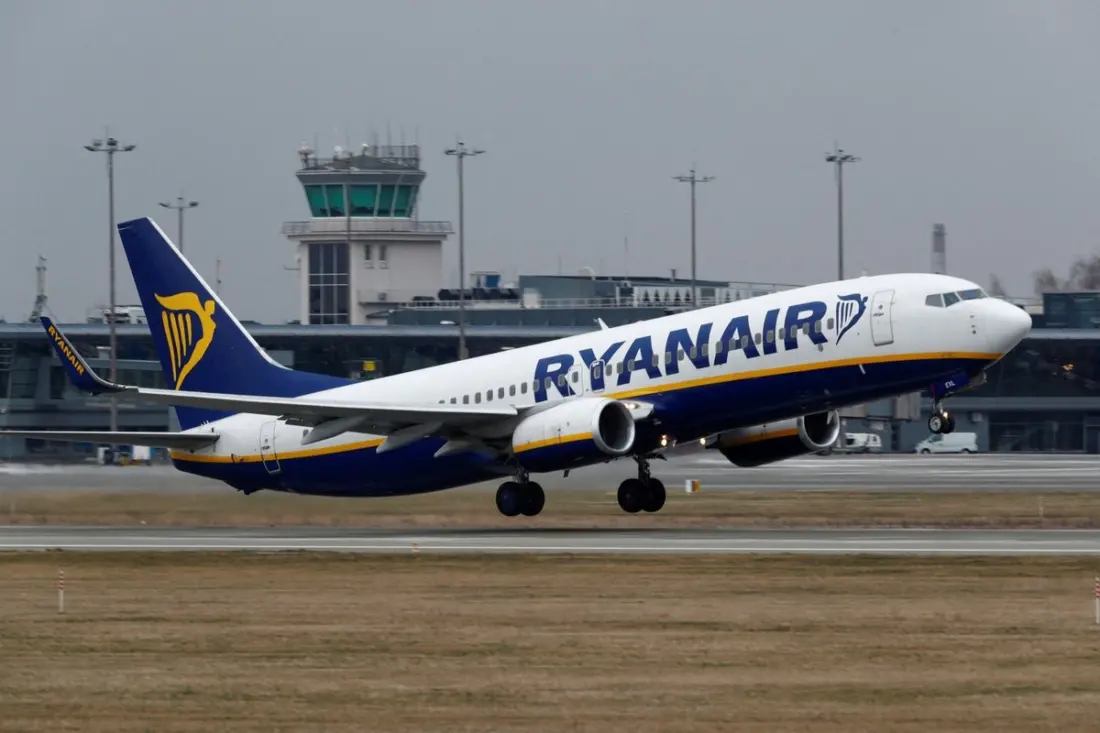
A Ryanair flight from Pisa to Glasgow Prestwick came within roughly 10 minutes of running dry after a storm-lashed evening of failed landings, diversions and confusion on the ground, according to an Air Accidents Investigation Branch (AAIB) report.
The flight, carrying 171 passengers and six crew, was scheduled to land at Prestwick on 3 October 2025, just as Storm Amy battered the UK with gale-force winds. The crew, who had been briefed via a pre-storm pack and email reminders, sensibly took on extra fuel and agreed Manchester would be their backup. Conditions at Prestwick were grim: surface winds around 33mph with gusts to 52mph. On the first approach, a windshear warning triggered at just 264 feet above the ground, forcing the pilots to break off and go around. A second attempt fared no better.
Then things unravelled. Despite Manchester being the agreed alternate, the diversion request was refused, with no explanation given. The crew turned towards Edinburgh instead, waiting five minutes for that to be accepted, then abandoned that landing too, with another windshear escape. By now burning through reserves, the commander diverted to Manchester and declared "MAYDAY MAYDAY MAYDAY FUEL" after the fuel predictor showed a landing with just 300kg on board — well below the 1,101kg final reserve. The 737 touched down at Manchester at 7.52pm with 363kg of fuel; by shutdown, only 240kg remained, about ten minutes of flying time. Notably, the report found the stressed crew never considered nearer options such as Newcastle, and there likely would not have been enough fuel for another aborted approach.
The AAIB blamed a "breakdown in communication" at Manchester, where policy should have seen the diversion accepted. The airport has since reiterated to stakeholders that accepting diversions is not the handling agent's call. Ryanair, for its part, had done the right things before departure — extra fuel, storm briefings, a named alternate.
For travellers, the takeaway is oddly reassuring and slightly unnerving in equal measure. Aircrew plan extensively for weather disruption, and margins like final fuel reserves exist precisely so that a bad evening ends in a safe landing, as this one did. But the system depends on clear communication between airlines, air traffic control and airports — and when that fails, passengers feel it in circling time, missed connections and, in rare cases like this, a genuinely tight safety margin. If you are flying to Scotland or northern England during storm season, expect the possibility of diversions and build slack into any same-day plans.