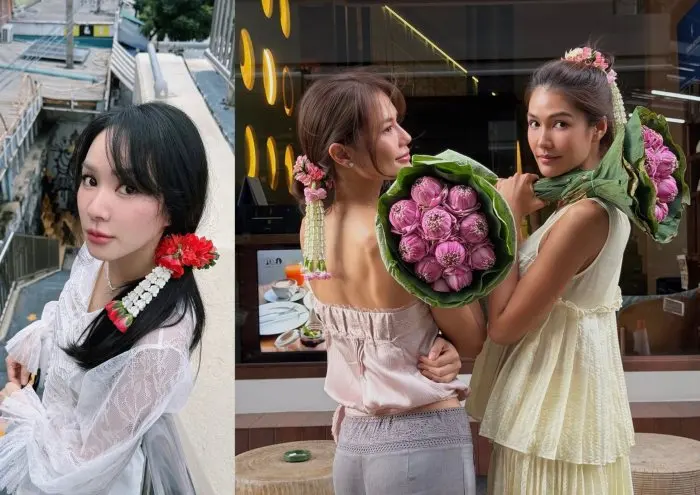
The phuang malai — Thailand's hand-strung flower garland — has spent centuries doing sacred work: hung at spirit houses, offered at shrines, presented to elders during Songkran. Now it's doing a new job. Young Thai trendsetters and visitors alike are wrapping the garlands around their buns, letting the floral pendant dangle down their backs, and turning a symbol of respect into the country's most photographed hairstyle.
The look is simple enough. A garland of fresh jasmine, crown flowers or rosebuds is coiled around an updo or braided into a crown, then paired with clean, neutral-toned outfits for a style that reads both traditional and contemporary. Social media did the rest. Photos of the garland-wearing look at Bangkok's most recognisable backdrops — Wat Arun (the Temple of Dawn) and the Grand Palace — have spread quickly, and the style now sits alongside earlier Thai-fashion crossovers like draping a sabai shoulder cloth over jeans or carrying pink lotus bouquets as props.
The epicentre is Pak Khlong Talat, Bangkok's 24-hour flower market. Vendors there have added a hair-styling service, wiring fresh garlands into customers' hair for around 100 baht, and some shops report long queues. It's a welcome boost for local florists and the traditional craft of garland-making, which takes real patience and skill to do well.
It's worth remembering what the garland means before you wear one. In Buddhist practice, phuang malai are offered at temples; they're also given to elders and honoured guests at weddings, welcoming ceremonies and other important occasions. Wearing one isn't offensive — Thai creators kick-started the trend themselves — but treating it with the respect it carries is part of getting the look right.
One practical note if you're planning a photo day: the Grand Palace has strict dress codes, so a sabai-and-jeans combo that bares shoulders won't get you in. A garland in an otherwise modest outfit is a safer bet. For travellers, this is an easy, inexpensive way to bring back something more memorable than a fridge magnet — a fresh garland, styled at the market, worn for an afternoon of temple-hopping and photos, and gone by the next day like the tradition it belongs to.