The Aichi-Nagoya Asian Games have become as famous for their logistics headaches as their sport. With roughly 17,000 athletes and officials to house, organisers scrapped the traditional athletes' village to save money — and the improvisation that followed has drawn sharp criticism from multiple delegations.
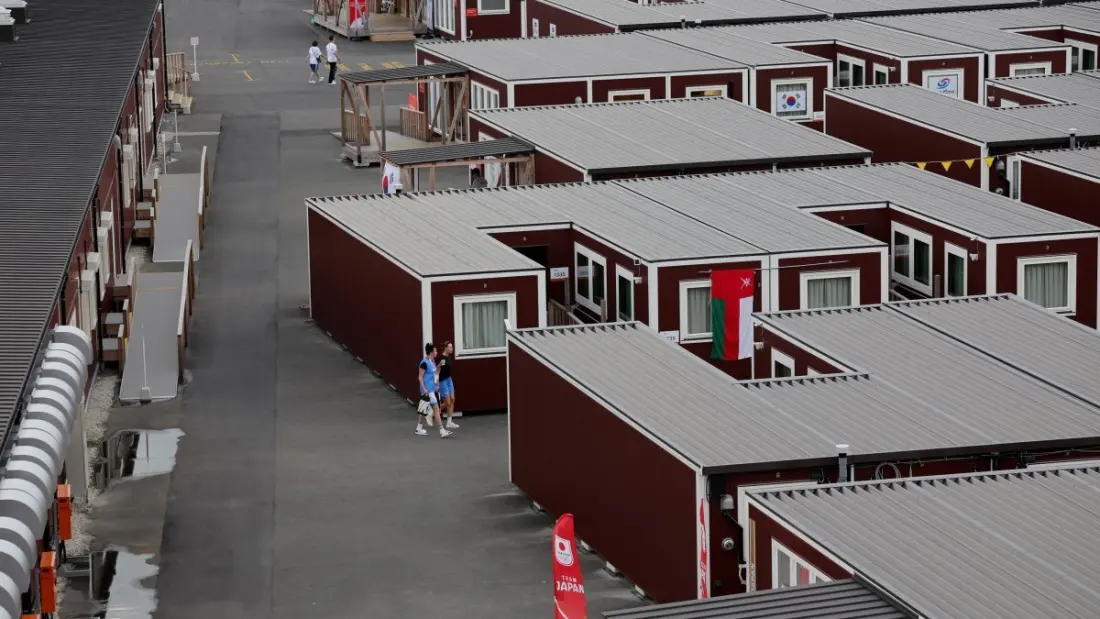
Instead of a village, teams are scattered across hotels, modular container-style units nicknamed "villas," and the Costa Serena cruise ship moored in Nagoya port, which is acting as a floating hotel for more than 4,000 people. Another 2,000 or so are in the modular units, whose narrow dimensions have raised eyebrows even among local residents who toured a prototype near Nagoya TV Tower. Organisers counter that the units are the largest size that can be trucked in pre-built, and that each bed comes with an ottoman to extend its length.
Thailand's Olympic committee has described the bedding shortfall as a game of musical chairs: at one point the team needed 201 beds on the cruise ship but got 170, so athletes and staff kept shuffling between hotels as people arrived and left. Thailand's medical team has been lodged some 90 minutes outside Nagoya entirely, with extra vehicles rented from Tokyo to reach athletes. Chinese Taipei saw it coming and pre-booked around 100 extra hotel rooms, but still got told just before departure that there weren't enough beds. Its spokesman called transport the team's "biggest headache," citing buses that arrived late or were rescheduled at the last minute.
South Korea's criticism has been bluntest still. Ryu Seung-min, president of the Korean Sport and Olympic Committee, said the conditions were hurting performances and graded the organisers an F. Athletes have aired complaints about rooms and food on social media too.
Organisers push back. Spokesman Hiroshi Koshizuka says shuttle buses have been increased as far as possible and insists no event has been delayed, with a complaints system now in place.
For travellers, the episode is a useful snapshot of Nagoya under pressure. The city, Japan's fourth-largest, is hosting an event of a scale it rarely handles, and the creative fixes — a cruise liner turned hotel in the port, container units in the city centre — show both the strain and the ingenuity of a destination outside the usual Tokyo-Osaka tourist circuit. If you're eyeing Nagoya during a major event, the lessons are clear: book rooms far in advance, expect hotel prices to spike, and build buffer time into any journey across town. Outside of big-event weeks, though, Nagoya remains one of Japan's easier and cheaper major cities to visit, with excellent food, a compact centre and the drawcards of Gifu and Ise nearby.