
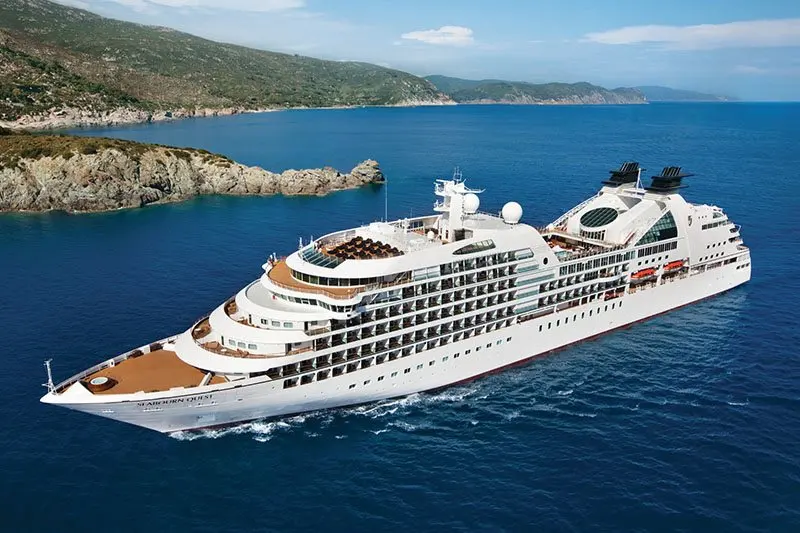
Seabourn Quest has quietly hit a milestone: 15 years in service. Delivered to Seabourn on 31 May 2011, a touch ahead of schedule, the ship was built at the T. Mariotti yard in Genoa and made its formal debut on 20 June 2011 after a 14-night maiden sailing from Barcelona to Piraeus. Actress Blythe Danner christened the vessel at a ceremony in the Spanish port before guests ever stepped aboard.
There's a bit of history attached to that anniversary. The Quest was the third in a series that began with the Seabourn Odyssey in 2008, but its two sister ships have both been sold off to Mitsui Ocean Cruises in recent years. That makes the Quest the last ship of its class still flying the Seabourn flag — a small but notable shift for a line known for its intimate, all-suite vessels.
Anyone booking it this winter or beyond will notice the difference a recent refit made. Earlier this year the ship went through what Seabourn describes as the most extensive interior update in its history. The Club got a new layout, a reconfigured bar and fresh lighting, while the Observation Bar, Atrium, Colonnade and main Restaurant were all modernised too.
Right now the 450-passenger ship is working the Mediterranean through November, running seven-night itineraries that can be chained together into 14- or 21-night voyages. Departure ports span Piraeus in Greece, Fusina in Italy, Istanbul in Turkey and Dubrovnik in Croatia — a good spread for mixing ancient sights with a small-ship experience.
Come early December, the Quest repositions to PortMiami for a Caribbean season of 12- to 16-night cruises focused on the Leeward Islands and beyond. Then it takes on the big one: Seabourn's 2027 World Cruise, sailing roundtrip from South Florida. That voyage runs 145 nights and calls at 67 destinations across 19 countries, with an emphasis on Australia and the South Pacific.
Why should a traveller care? For one, this is a rare chance to sail a newly refreshed small ship — 32,346 tons and just 450 guests means an unusually high space-per-passenger ratio and a quieter, more personalised style of cruising than the mega-ships. The modular Mediterranean itineraries suit people who can't commit to a fortnight, while the Caribbean and World Cruise options cater to those after longer, more immersive voyages. And with the sister ships gone, the Quest now carries a bit of pedigree as the sole survivor of its class — worth experiencing while it's still in service.