Video calls were supposed to kill the work trip. The numbers say otherwise. Business travel in the US hit $317 billion in 2025, growing 1.1% year on year, and is forecast to edge up to $319 billion in 2026, according to U.S. Travel. Across the Atlantic, a Travel Counsellors for Business survey from early 2026 found 39% of UK small and medium-size businesses plan to increase international trips over the next year. And in a Global Business Travel Association poll, 86% of business travellers said their trips were worth it.
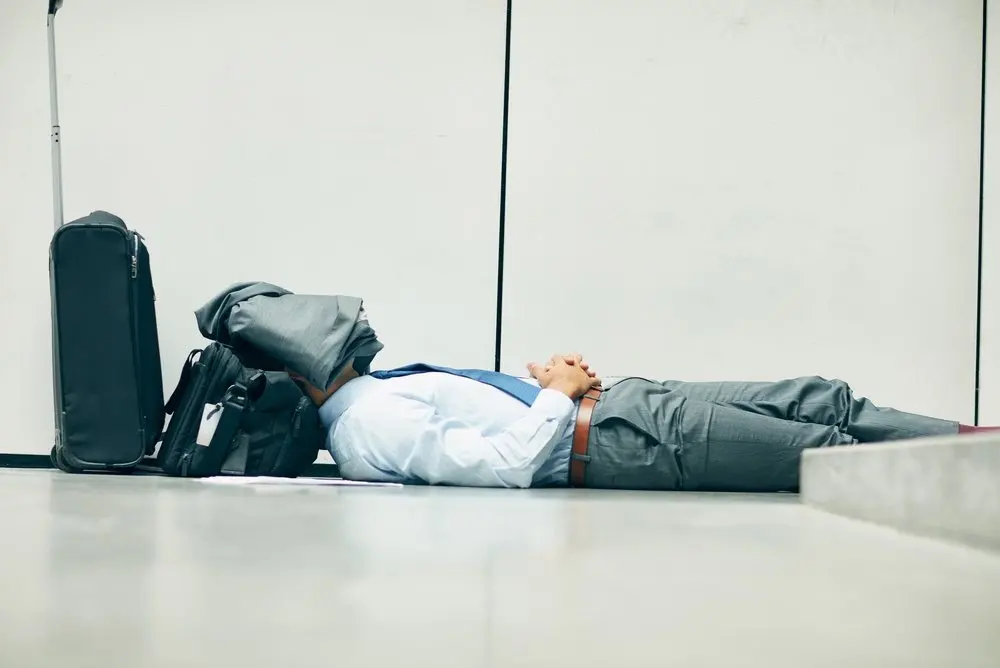
What's changed is how people travel for work. The frantic, bagel-at-the-gate grind of the George Clooney era is falling out of favour. Employers are waking up to the fact that an exhausted traveller is a useless one: research from airport-lounge membership company Dragonpass found 27% of business travellers say they underperform because of travel stress. The new thinking favours sensible schedules, recovery time and somewhere decent to work — because a slightly pricier, saner itinerary beats a cheap one that wrecks your pitch.
The bigger shift is what happens after the meeting ends. "Bleisure" — bolting leisure days onto a work trip — has gone mainstream. Precedence Research found 59% of Gen Z and 65% of millennial workers prioritise blended-travel opportunities when choosing a job, and SAP Concur data shows 22% of UK respondents would refuse a business trip entirely if they couldn't extend it for personal travel.
Hotels are adapting fast. JA Resorts & Hotels' Phil Dickinson points out that a guest flying into Dubai for meetings needs fast connectivity and efficient meeting rooms on Friday — and good restaurants and beach access by Saturday. Frasers Hospitality's EMEA COO, Rebecca Hollants Van Loocke, adds that guests increasingly want local authenticity, wellness and a sense of place, especially on longer stays. Expect corporate bookers to favour properties that can wear both hats.
There's a counterweight: sustainability. Companies now measure travel emissions by route and transport mode and build that into approval policies, says Professor Harald Zeiss of Germany's Harz University of Applied Sciences. In practice that means rail over short-haul flights where possible, direct flights, stacking multiple meetings into one journey, and picking venues reachable by public transport.
Even so, none of this is slowing the trip count. Accor-funded research found employees believe their revenue-generating ability jumps 36% when key meetings happen in person, and 68% prefer presenting to clients face to face. The logic is simple: if you're just sharing information, stay home. If the outcome depends on trust, chemistry or negotiation, get on the plane.
Why should holidaymakers care? Because bleisure is reshaping hotels in your favour — properties are investing in better work-friendly rooms, flexible stays, local experiences and wellness facilities to court corporate bookers. And if your employer will fly you somewhere on their dime, extending the weekend costs you far less than a dedicated holiday. The work trip of 2026 looks a lot like a holiday with a meeting attached.