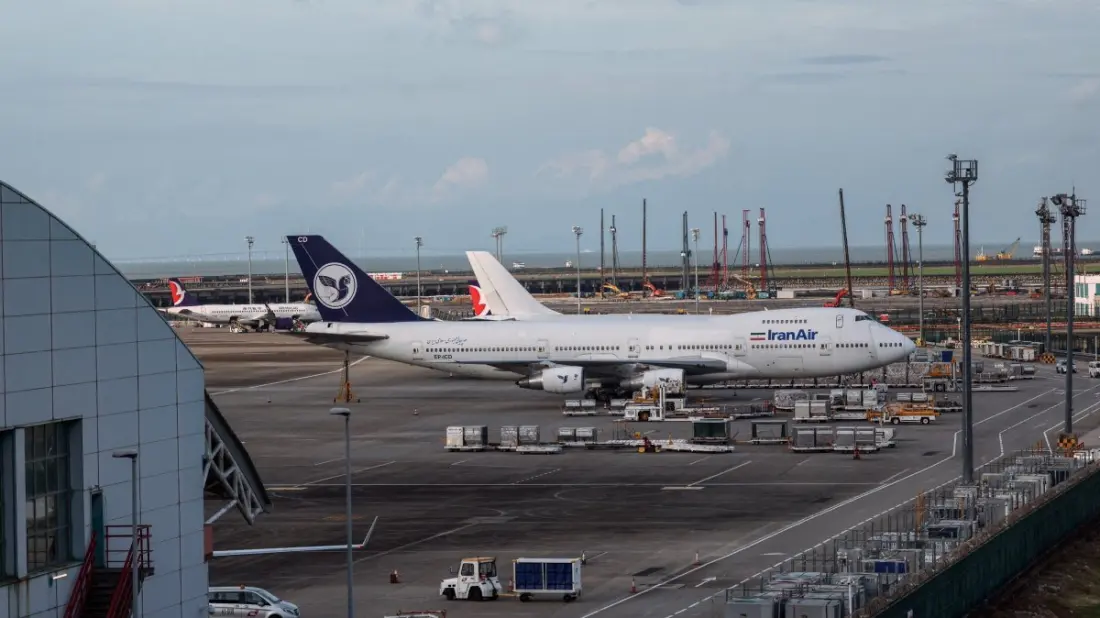
Iran's aviation sector is about to be squeezed off the map entirely, if Washington gets its way. US Treasury Secretary Scott Bessent said on Monday that as of 23 September, "all the Iranian airlines will be shut down around the world" under American sanctions.
The mechanism is blunt: any company, airport or agent anywhere that fuels an Iranian aircraft, handles its landings or sells its tickets risks being cut out of the US dollar system. Given the dollar's grip on global finance, that effectively grounds Iranian carriers well beyond American jurisdiction. Earlier this month the Treasury had already sanctioned every remaining Iranian airline that had escaped penalties, and it has also targeted foreign-based firms supporting Iran's aviation industry.
The move lands in the middle of a wider conflict. War broke out after joint US and Israeli strikes on Iran in late February, and Tehran responded by blocking the Strait of Hormuz, the chokepoint for a large share of the world's oil, sending energy prices climbing across the Middle East and beyond. Bessent has framed the campaign as an "economic D-Day" designed to financially strangle Tehran. His comments came a day before he sat down with Chinese Vice Premier He Lifeng ahead of a planned Trump–Xi summit — significant, since China is one of Iran's biggest economic backers and a major customer for its oil.
None of this comes out of nowhere for Iranian aviation. The sector has spent decades under sanctions that made it nearly impossible to buy modern aircraft, spare parts or legitimate maintenance services, leaving its fleets ageing and its international routes thin. Wednesday's deadline, in effect, closes what little remained.
For travellers, the practical picture is stark. Iran has been effectively off-limits for tourism since the war began, and this development removes even the theoretical option of flying Iranian carriers through third countries — Mahan Air's old routing networks through the Gulf and Turkey, for example, are finished. Anyone with existing bookings on Iranian airlines should assume cancellation and pursue refunds through their card provider rather than the carrier. The knock-on effect matters more broadly too: elevated oil prices tied to the Hormuz blockage feed into air fares across the region, so flights through the Gulf, and any itineraries touching the Middle East, are worth reviewing for surcharges and schedule changes. Travellers holding bookings with non-Iranian carriers in the region should monitor notices closely, as airspace closures and insurance-driven reroutings have been shifting throughout the conflict. This is a story to watch, not one that changes any holiday plans right now — but if you hold miles, codeshare tickets or bookings with any carrier touching Iranian airspace or partners, it's worth checking your itinerary this week.