Central Zagreb is in line for a serious makeover. City planners have unveiled a concept that would turn Masarykova, Teslina and stretches of Preradovićeva and Gajeva into a linked pedestrian zone, stitching together two of the Lower Town's key squares, Trg Republike Hrvatske and Trg Nikole Šubića Zrinskog.
The plan, drawn up by the Zagreb Institute for Spatial Planning and presented on 21 September at the Archaeological Museum during European Mobility Week, is still at concept stage. But the direction is clear: people and bikes come first, cars second.
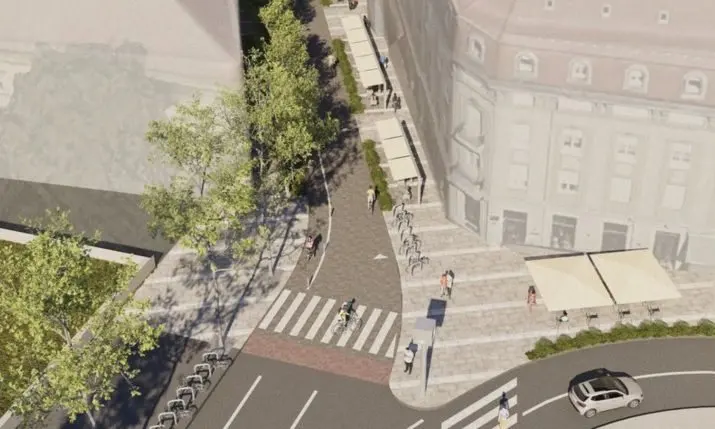
The scheme splits the area into two tiers. A fully pedestrian section would cover Masarykova east of Gundulićeva, all of Teslina, and parts of Preradovićeva and Gajeva north of Berislavićeva. The stretch of Masarykova between Trg Republike Hrvatske and Gundulićeva would become traffic-calmed rather than fully car-free.
Greenery is a big part of the pitch: more than 50 new trees and roughly 600 square metres of planted space, plus permeable surfaces designed to provide shade and cool the streets in summer. A unified look is planned too — new paving, seating and street furniture throughout — with focal points flagged near spots including Kavkaz, Loewy Tower, Obrtnički prolaz, Prolaz sestara Baković, the ZKM theatre and the Archaeological Museum.
Café and restaurant terraces will largely stay put, though they're expected to be reorganised for a tidier, more consistent appearance. Under the surface, ageing infrastructure gets renewed as part of the works, with planners stressing the need to respect the Lower Town's protected heritage character. The concept was shaped between March and September 2026 after input from residents and businesses, and the presentation ended with a panel featuring Deputy Mayor Luka Korlaet, Faculty of Transport Sciences dean Marko Šoštarić and institute director Nikša Božić.
For travellers, this is good news. Zagreb's Lower Town is where much of the city's café culture, museums and everyday charm live, and the new zone would make wandering between the Croatian National Theatre area and Zrinjevac park far more pleasant — no dodging traffic, more shade, more places to sit with a coffee. The streets affected sit right on the walking route most visitors already take.
Timings aren't fixed yet since this is a conceptual design, so don't expect barricades tomorrow. But if it proceeds, it would extend the car-free feel of the upper city centre into the 19th-century grid of the Lower Town, putting more of Zagreb's best architecture and café terraces within one relaxed, walkable loop. Anyone planning a city break in the next couple of years should keep an eye on how the project moves from drawings to diggers.