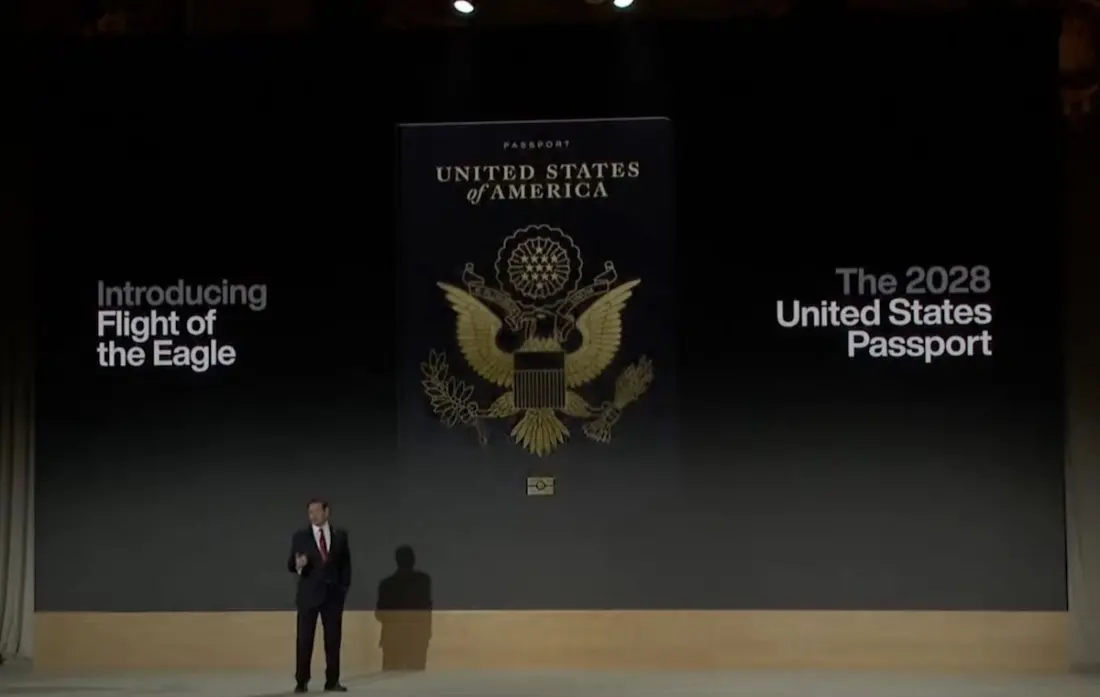
American passports are getting a full makeover, and the rollout comes with a mix of practical upgrades and political theatre. Secretary of State Marco Rubio unveiled the redesign on September 29, 2026, as part of the launch of america.gov, the administration's new one-stop portal for federal services. The new book starts shipping in 2028.
The most useful change for travellers: from sometime in 2027, first-time applicants should be able to apply for a passport entirely online through america.gov. Renewals already work digitally, but this would extend the service to brand-new applications — including taking your own passport photo with a smartphone. No more paper forms or pharmacy photo appointments, assuming it delivers as promised.
The physical book is changing shape too. The standard passport moves from 26 pages to a uniform 38. That's a free upgrade for anyone who currently gets the standard book, but frequent travellers lose the option of the 50-page version, which heavy stamp collectors have long relied on.
Then there's the design. The new passport, called "Flight of the Eagle," features a much larger golden seal, with "United States of America" repositioned above it. Interior pages showcase American history — the Revolutionary War fighting at Lexington, the Wright brothers, the flag raising at Iwo Jima, and the space programme — with an eagle positioned so flipping the pages creates a flipbook animation effect.
The eyebrow-raiser comes in the launch presentation. Describing the book as "a visual story of the greatest nation in the history of the world," Rubio showed 16 pages, and the first one depicts President Trump — artwork closely resembling the limited-edition "patriotic passport" already sold featuring him. Whether that image survives into the final production version is an open question. A sitting president permanently printed inside a standard travel document would be unprecedented for the US.
So what does this mean if you're due a new passport? If your current book is full or expiring before 2028, nothing changes immediately — the current design stays valid and renewals keep working as they do today. If you're a heavy traveller who maxes out pages, consider the larger 50-page book while you still can, since the 38-page standard may fill faster on a big multi-country itinerary. And if you've never held a passport, waiting until 2027 could save you a trip to an acceptance facility, though it's wise not to cut it fine if you have a trip already booked.
For everyone else, it's mostly cosmetic — US passport holders will still clear the same borders, and border officers will stamp (or scan) it exactly the same way. The design debate is more about national identity than travel convenience. The real wins here are administrative: a bigger standard book and, potentially, a fully digital first-time application process that brings the US in line with countries that have done online passport applications for years.
One Mile at a Time