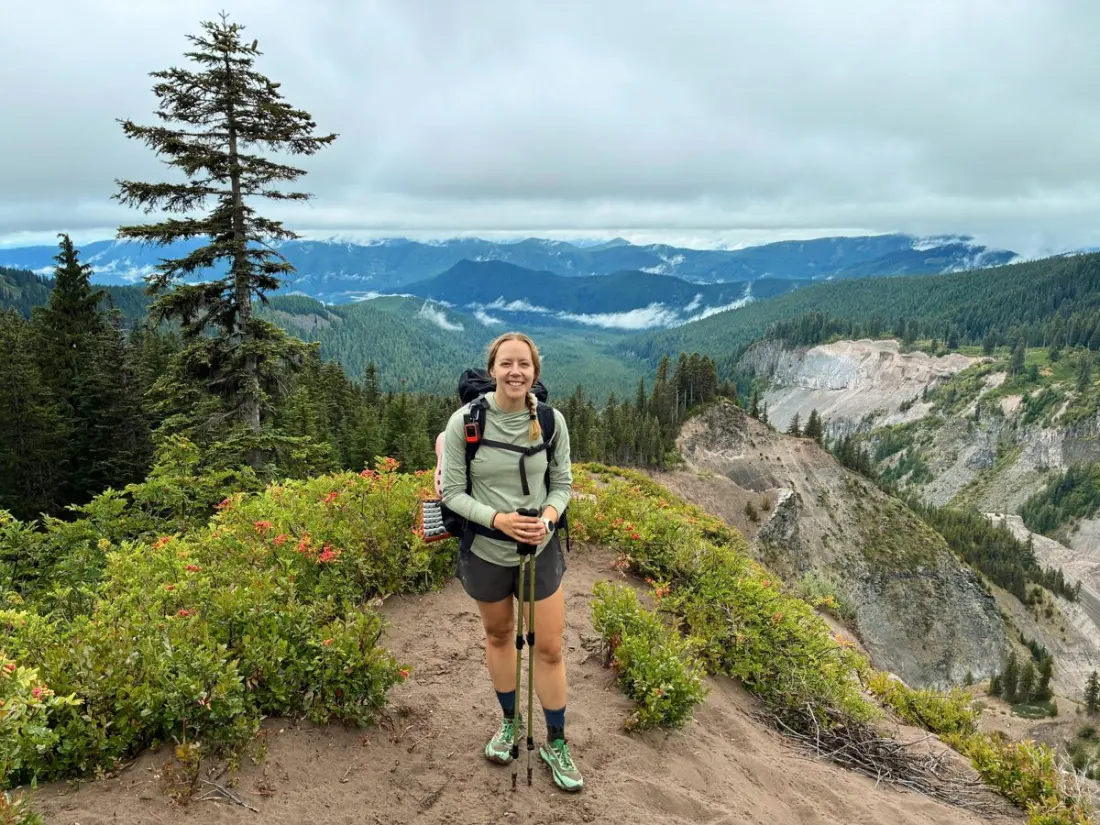
You don't need six months off work to hike the Pacific Crest Trail. One section hiker — who already finished the Appalachian Trail over three years while working full-time — is proving it, with a plan to chip away at the full 2,650-mile route between Mexico and Canada in five years, one roughly 250-mile chunk at a time.
The logic behind the five-year deadline is practical rather than heroic. Flying from the East Coast to the West for every trip is expensive and time-consuming, but dragging the project out over a decade felt like a recipe for never finishing. So the sweet spot became sections long enough to justify the airfare — around 250 miles, or 10-12 days of walking — while fitting into a working life with limited vacation days.
The planning process reads like a masterclass in logistics. Airports matter more than miles: Mammoth's airport is nearly useless in summer, so nearby hubs like Reno, Redding and Palm Springs shape where sections start and end. Public transport fills the gaps — the Metrolink from Acton into Los Angeles, the Columbia Gorge Express from Portland to Cascade Locks, Kern Transit and Eastern Sierra Transit in the southern Sierra — supplemented by trail angels found mostly through Facebook groups rather than hiking apps.
Timing follows the terrain. Southern California works best in spring, when water sources are flowing and wildflowers are out. The Sierra Nevada and Washington need late summer to dodge snow and sketchy river crossings, while Northern California and Oregon sit comfortably in the mid-summer-to-autumn window. The hiker deliberately started with gentler stretches — Oregon, then Southern and Northern California — to build experience before tackling the High Sierra and Washington.
Direction is decided by whichever airport pairing is cheapest, and by which crowd to join: hiking with the southbound bubble in Oregon last August delivered a great trail community, while a spring Southern California section meant walking alongside northbound thru-hikers. Permits, often seen as section hiking's biggest headache, turned out to be manageable — some sections need none at all, and a local Central Cascades permit even allowed camping at Jefferson Park, which the hiker calls the most beautiful campsite of the trip, something the standard long-distance permit doesn't permit.
Other tricks worth stealing: book flights around Memorial Day or the Fourth of July to save leave days, build buffer time into every schedule, and always book a night near the airport at the end of a trip to shower, launder and repack before flying home. One cautionary tale: after reading about freezing spring conditions in Southern California, an expensive 10-degree sleeping bag was bought and a cabin booked — only for an unseasonal heatwave to arrive.
For anyone dreaming of a big trail without quitting their job, this is a realistic blueprint: five years, five summers of long-ish sections, and a lot of clever transport planning.
Via The Trek.