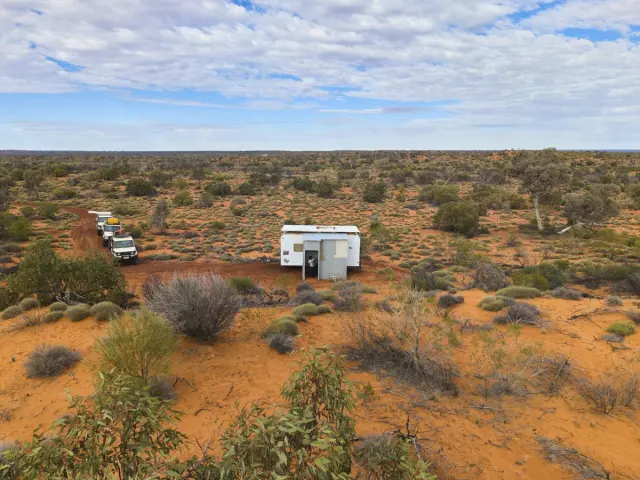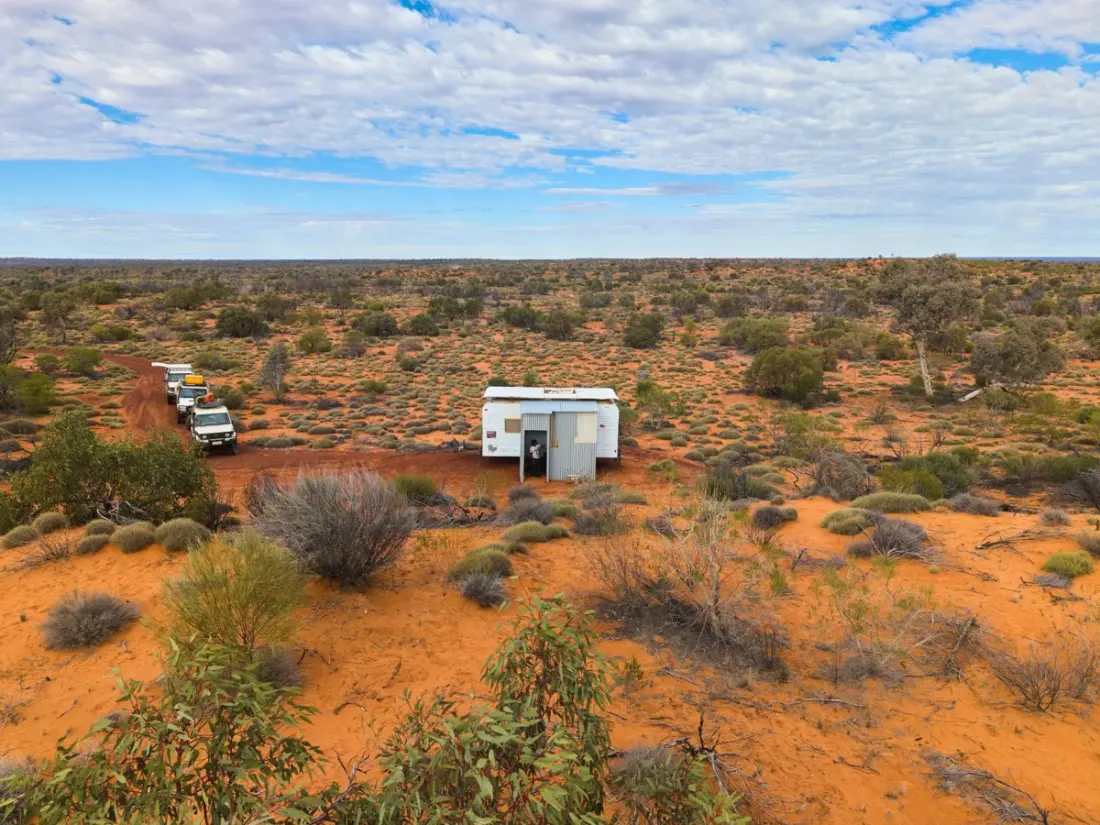
Halfway along the Anne Beadell Highway — a 1,380km unsealed track cutting through the Great Victoria Desert — sits Ilkurlka, the only fuel stop for hundreds of kilometres in any direction. It's 770km west of Coober Pedy and 550km east of Laverton, deep in Spinifex country. But this roadhouse is far more than a petrol pump in the sand: it's a place where art literally helped win legal recognition of an entire people's homeland.
The roadhouse takes its name from a nearby sacred rock hole, a kapi piti of deep significance to the Spinifex people. In the 1990s, Elders camped there and painted their knowledge of Country — land they'd occupied for hundreds of generations before being displaced by the British nuclear tests at Maralinga. Those paintings became evidence in the Spinifex people's Native Title claim, and in 2000 they won title to 55,000 square kilometres of the Great Victoria Desert.
That artistic momentum became the Spinifex Arts Project, launched in 1997 from the Tjuntjuntjara community, 130km south of Ilkurlka. Artists painted birthplaces and Tjukurpa (Creation stories) in the vivid acrylic style of the Western Desert, travelling back to significant sites — including Ilkurlka — for week-long 'bush trip' painting camps. The late artist Roy Underwood, Ilkurlka's main custodian, painted the rock hole's role as a ceremonial gathering place. Songlines converge there, and the site holds the Kalaya Tjukurpa (Emu Dreaming): legend says the smooth marking on the rock hole is where a tobacco-sick emu pressed its breast as it drank.
After Native Title, the Spinifex people built Ilkurlka in 2004 — roadhouse, manager's house, camping facilities — and the art never stopped. The latest chapter is possibly the world's most remote camera obscura, installed in an old caravan that was once towed over 110 sandhills to serve as a School of the Air classroom, then sat abandoned until 2010. Now, inside its white-painted walls, a pinhole projects the desert upside down: blue sky across the floor, clouds drifting through, spinifex and red dunes crawling up the walls. A recorded soundscape adds birdsong, brushstrokes on linen and distant dogs. The work, Nganampa Ngura Talingka Ngurulpa (Our Home Between the Dunes), was created with Anangu artists from the Milpa Project and Fremantle photographer Duncan Wright. 'We feel proud that we made something which helps tourists see the importance of Ilkurlka to Spinifex people,' says project artist Shonna Jamieson.
For anyone tackling the Anne Beadell by 4WD, Ilkurlka is an unavoidable and genuinely rewarding stop — fuel, camping under big desert skies, and a slow hour inside a caravan watching the outback paint itself onto the walls. It's a rare chance to experience one of Australia's most significant contemporary art stories in the exact place it was made.
Story via Australian Geographic.