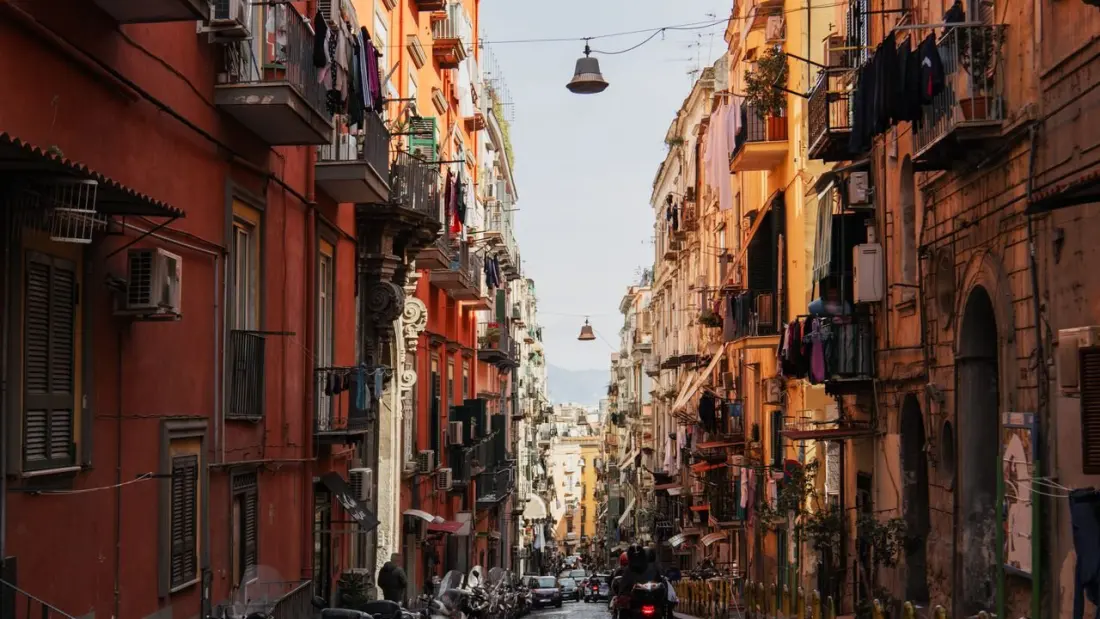
Naples has a reputation, and most of it is out of date. Italy's third-largest city is far safer and more visitor-friendly than it was in the early 1990s, and post-pandemic tourist numbers have surged accordingly. What hasn't changed is the beautiful chaos — the noise, the dialect ringing off the walls, the traffic — so a few local conventions go a long way.
Safety first: the Quartieri Spagnoli and Rione Sanità, once no-go zones, are now highlights of any visit. Petty crime has fallen sharply, though normal big-city caution applies — keep flashy watches hidden, mind pickpockets on public transport, and be warier around the train station at night. Outlying districts like Secondigliano and Scampia are best avoided entirely.
Taxis are cheap and handy after dark, but use official ones: roof sign, metre on the dash. Ignore touts at the station and cruise port. Official cabs offer two fares — a fixed rate ('tariffa fissa') for standard trips or the meter ('tassametro') — and the fixed fare is usually the stress-free choice. And whatever you do, don't drive. Local driving is theatrical at best; park in a secure garage and leave the car until you depart.
Coffee is a ritual, not a beverage. Espresso at the bar comes in a heated cup with a small glass of water to cleanse the palate first, and it's drunk in one go. The local roast blends Arabica and Robusta for a serious kick. Look out for the 'caffè sospeso' tradition, where customers pay forward an extra coffee for someone who can't afford one.
Come hungry. Portions are enormous and refusing food is close to an insult — pizza fritta, arancini, pasta with potatoes and provola, melanzane alla parmigiana. Pace yourself and accept that you'll be stuffed.
For sightseeing, the Napoli Artecard (€27 for three days) covers free entry to three museums, half-price on further attractions, and free public transport — good value when MANN archaeological museum alone costs €20. The €41 Campania Artecard extends the deal to Pompeii and Herculaneum, with a bigger discount version for ages 18–25.
Go underground, too. Napoli Sotterranea's guided tours descend 35 metres into some 450km of Graeco-Roman tunnels, aqueducts and wartime bomb shelters — about 1km of walking, and not for the claustrophobic.
Finally, escape the city. The Circumvesuviana train reaches Pompeii and Herculaneum; ferries reach Procida in 30 minutes and Ischia in an hour; Pozzuoli to the west has a Roman amphitheatre and excellent fish restaurants. A Naples trip that mixes street chaos with these day trips is the version locals would actually recommend.