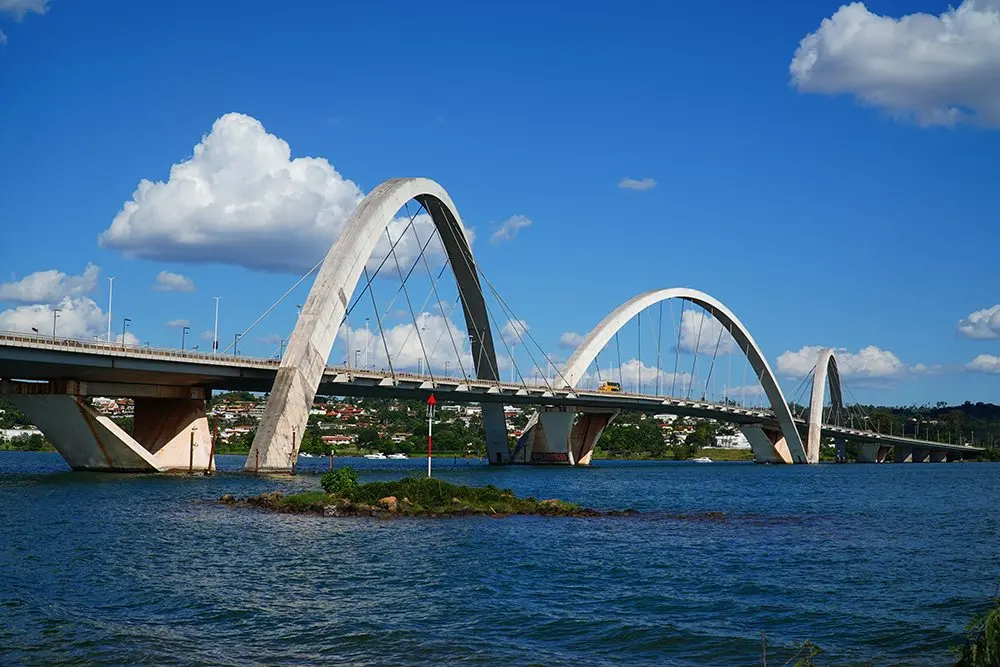
A 28-year-old Brazilian military police diver has died during a training exercise in Lake Paranoá, the reservoir that curves through the centre of Brasília, with investigators looking at whether a lung-overexpansion injury was to blame.
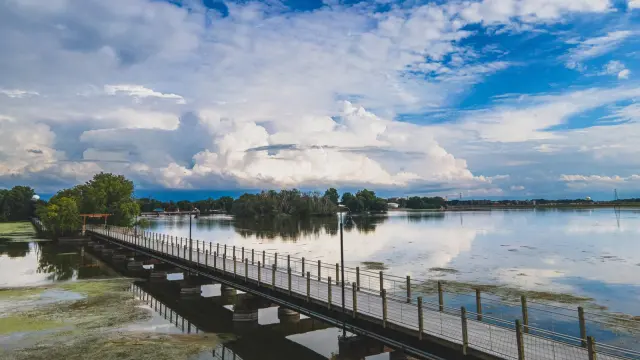
Lucas Duran da Silva, a soldier with the Federal District Environmental Military Police Battalion, was training near the city's landmark Juscelino Kubitschek Bridge on Monday 21 September when he lost consciousness underwater. His colleague — both men were qualified advanced divers with certification to 40 metres — brought him to the surface and started CPR before fire department crews arrived, but he was declared dead at the scene.
Details reported by local outlet Metrópoles suggest the exercise involved breath-hold diving, with Duran freediving while his partner supported him on scuba. At some point Duran took a breath from his companion's alternate air source and began ascending. The support diver surfaced alone, went back down to search, and found him unresponsive a short time later.
The Federal District Civil Police say pulmonary barotrauma is a preliminary line of inquiry — a possibility that only arises because of the switch between the two disciplines. A freediver breathing surface air is normally safe from lung-overexpansion injuries: the air in the lungs simply returns to its original volume on the way up. Breathe pressurised gas at depth, however, and that gas keeps expanding during ascent. If the diver doesn't exhale continuously, the lungs can rupture, forcing gas into the bloodstream and potentially causing an arterial gas embolism — bubbles blocking blood flow to the brain or other organs. The cause of death will only be confirmed after a post-mortem, and the military police have opened a formal inquiry and begun taking statements.
For anyone who dives or freedives, the case is a stark reminder of a rule taught on every entry-level course: never hold your breath on ascent from scuba, and don't mix freediving and scuba in a single session or dive. It's also a note for travelling divers to check how training and support operations are run before getting in the water anywhere, however experienced the personnel.
Lake Paranoá itself is a Brasília fixture — an artificial lake built when the capital was constructed in the late 1950s, now used for sailing, wakeboarding and open-water swimming rather than as a diving destination. This story matters less as a place to go and more as a safety lesson that applies to any diver, anywhere.