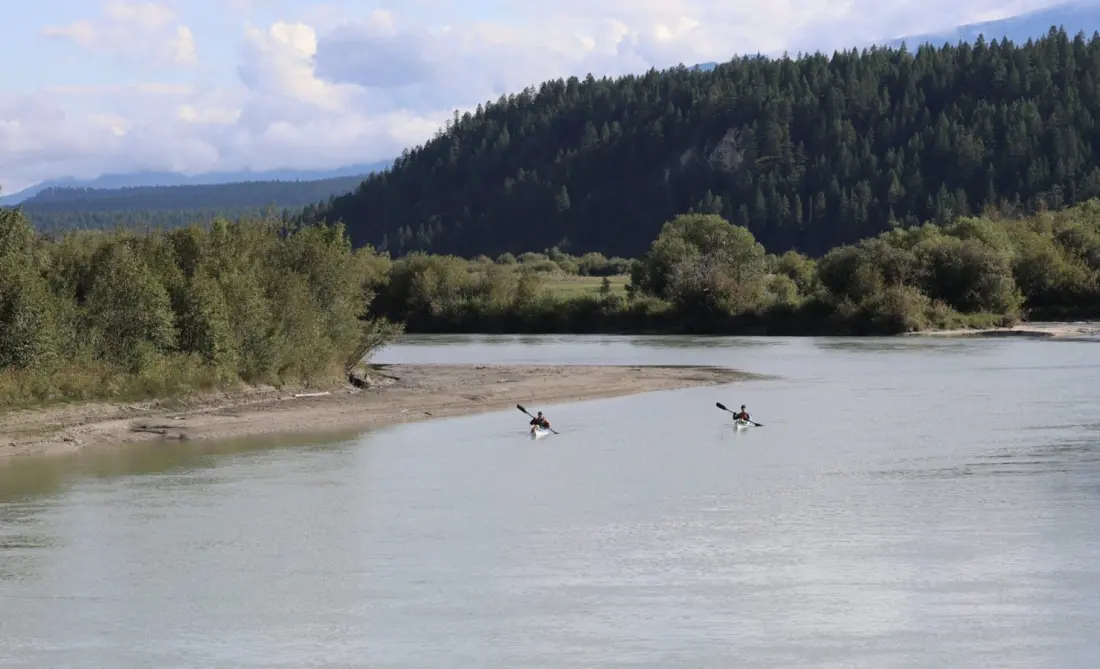
Later this month, two university students will push off from Canal Flats in British Columbia and attempt something surprisingly rare: paddling the entire Columbia River, all 1,930km of it, until the water reaches the Pacific at Astoria, Oregon.
Oscar Seltzer and Jack Syverson are students at Dartmouth College in New Hampshire. Seltzer is the experienced half — he's treasurer of the college's Ledyard Canoe Club and a seasoned paddler. Syverson, by contrast, was a novice just six months ago. He has spent that time cramming in wilderness medicine certification, swiftwater rescue training and endless practice at kayak rolls, a process he has cheerfully described as being waterboarded by his teammate.
The route sounds simple on a map but is anything but. The Columbia is the fourth-largest river in North America by flow, and its steep gradient makes it a hydropower machine. That means the pair will need to portage around 14 dams on their way downriver — plus one more awkward carry across the international border as they cross from Canada into the United States.
They expect the toughest stretch to be the Columbia River Gorge, the dramatic canyon where the river cuts through the Cascades on the final run to the sea. It's famous for ferocious wind, and the duo anticipate some of their hardest days there, whether paddling or outright hauling their boats. The gorge is also where the terrain flips from dry grassland into forest.
Their choice of boat is interesting: sea kayaks. Sluggish in rapids, admittedly — but thanks to those 14 dams, most of the Columbia's rapids have been drowned under reservoirs anyway. The pair will mostly be paddling long, flat stretches of impounded water rather than whitewater.
Source-to-sea trips on the Columbia are genuinely uncommon, especially compared with big American rivers like the Mississippi, which get far more attention from long-distance paddlers. That's partly a reflection of how the dams have reshaped the river: this isn't a wilderness float, it's a slog of portages, reservoirs and border paperwork — and a pretty compelling way to see the Pacific Northwest's working river up close.
For travellers, the story is a good reminder that the Columbia corridor is one of the most rewarding routes you can drive, cycle or paddle in segments. The gorge towns of Hood River and The Dalles make excellent bases, Astoria is a charming end-of-river stop with maritime history and a thriving food scene, and the Canadian headwaters near Canal Flats sit in gorgeous Rockies country. You don't need to kayak 1,930km to appreciate it.
First reported by ExplorersWeb.