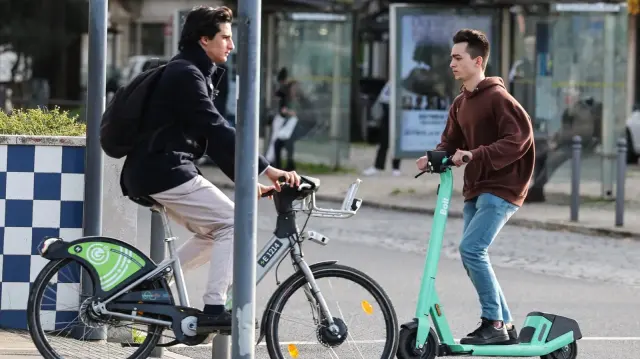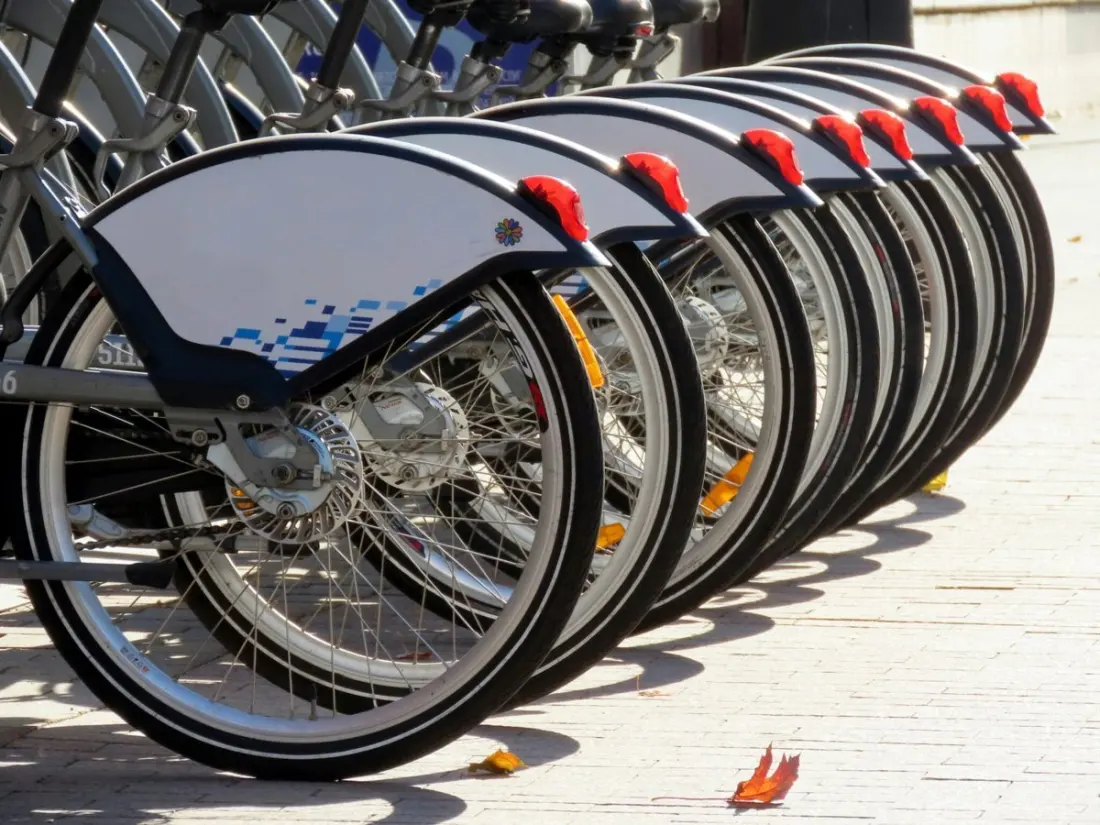
Portugal has public bike-sharing schemes, but according to environmental association Quercus, most are so small they barely register as a transport option. Marking European Car Free Day, the group proposed a National Public Bicycle Systems Plan to scale things up — and the numbers explain why.
Figures from the Collaborative Network for Active Mobility show that half of the country's existing public bike schemes have four or fewer stations and 15 or fewer bikes. Networks that size, concentrated in city centres and rarely reaching outer neighbourhoods or neighbouring municipalities, make it hard for anyone to build a bike into daily life. That's a gap that affects visitors as much as locals: tourists arriving in a Portuguese city often find a token docking station near the sights and nothing useful beyond it.
Quercus wants minimum standards for network size and coverage, stable multi-year funding, and a continuous network of safe cycle routes linking bike stations to schools, railway stations, bus terminals and workplaces. It's also pushing for integration: one regional app and fare system across municipal schemes, plus combined public transport and bike-share passes so a bike can cover the notorious "last mile" of a train or bus journey.
The wish list goes further — lower VAT on buying, repairing and renting bikes and safety gear, annual publishing of usage and emissions data, cycling education in schools, and tax incentives for employers who subsidise bike commuting or provide fleet bikes, with clearer insurance rules for cyclists hurt on the way to work.
The economic case isn't small. Research from EIT Urban Mobility and Cycling Industries Europe cited by Quercus estimates shared bike systems already generate about €305 million a year in economic and social benefits across Europe, cutting around 46,000 tonnes of CO₂ and 200 tonnes of air pollutants annually. Add roughly €40 million in avoided healthcare costs, 760,000 hours of congestion-related productivity saved and 6,000 full-time jobs, and the sector could be worth €1 billion a year by 2030 if investment continues.
The Portuguese government has recently earmarked €2.02 million for 56 municipalities to draft Sustainable Urban Mobility Plans. Quercus welcomes the money but stresses that plans on paper need to turn into actual infrastructure and incentives.
Why should a traveller care? Because bike-sharing is one of the cheapest, most enjoyable ways to explore a city — and Portugal's mild climate makes cycling viable much of the year. If the national plan gains traction, visitors to Porto, Lisbon or smaller municipalities could soon hop between integrated bike stations and rail links with a single pass, instead of relying on cars or patchy buses. In the meantime, expect the current picture: good little schemes in some centres, not much elsewhere. Worth checking what's available before you arrive rather than assuming a bike will get you from the station to your hotel.