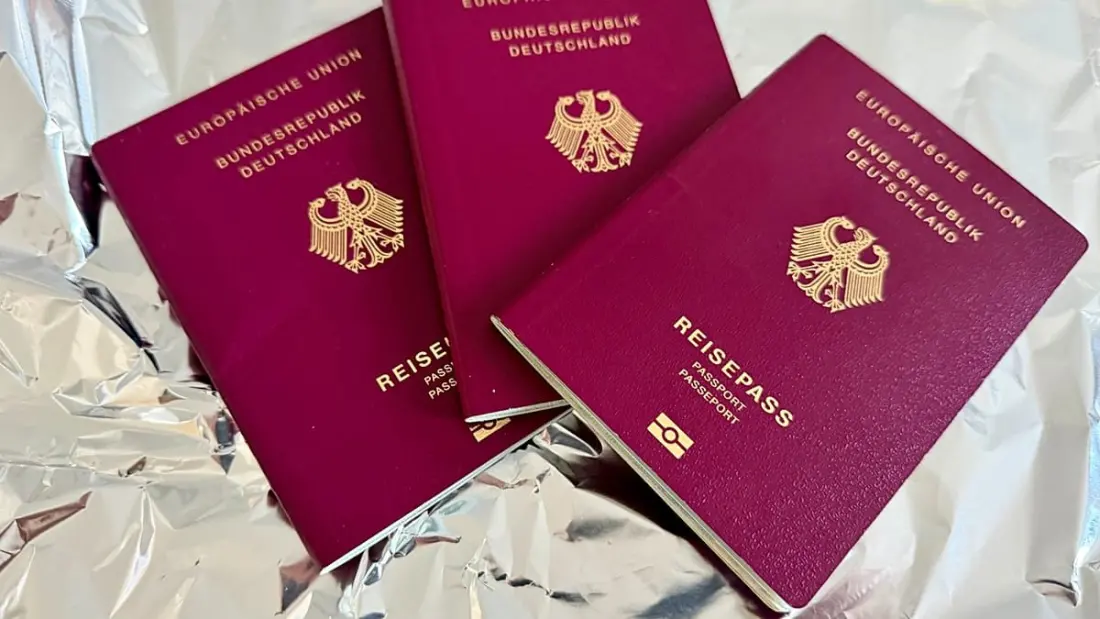
A strange sight is appearing at border queues: travellers unwrapping passports from layers of aluminium foil before handing them over. The trend, doing the rounds on TikTok and Reddit, is based on the belief that a kitchen-wrap shield can stop criminals wirelessly skimming your personal data. Security experts say it does almost nothing — and it slows everyone down.
The fear behind the trend isn't entirely random. Modern electronic passports, including German ones, contain an RFID chip embedded in the data page. It's there to make border checks faster and tamper-proof, and it stores a fair amount: your digital photo, name, place of birth, sex, eye colour, height, address, and two fingerprints collected when the document was issued. That's a lot of sensitive information in one place, so the idea of someone silently reading it as they brush past you in an airport is understandably unsettling.
The catch is physics. An RFID chip has a very short read range. For a scanner to pick it up, it would need to be practically resting on the passport — think contactless card payments, where the reader has to be millimetres away. The German Federal Office for Information Security notes the chip is designed for fast, controlled identity checks at borders, not casual snooping. Experts quoted in the reporting agree that unauthorised access during everyday travel is extremely unlikely.
That makes the foil trick, at best, a placebo. Specialists describe it as largely superfluous, since a would-be thief would need proximity that any victim would notice. Meanwhile, the practical downsides are real: fumbling with foil at passport control creates delays and queues, plus some confused looks from fellow travellers and border officers.
There's also solid legal protection behind the chip itself. In Germany, chip data isn't centrally stored; the passport registers held by authorities contain only the same details that existed before electronic passports were introduced. Fingerprints live solely on the document, and under section 16 of the German Passport Act, all fingerprint data used during production is irrevocably deleted once the holder collects the passport.
For travellers, the takeaway is simple: your passport chip is far less exposed than the viral videos suggest. If you want extra peace of mind, an RFID-blocking sleeve or wallet is cheaper, neater and less chaotic than re-wrapping a document in kitchen foil every time you cross a border. Either way, the bigger risks to your identity on holiday — unsecured Wi-Fi, card skimming, shoulder surfing — are worth more attention than your passport's short-range chip.