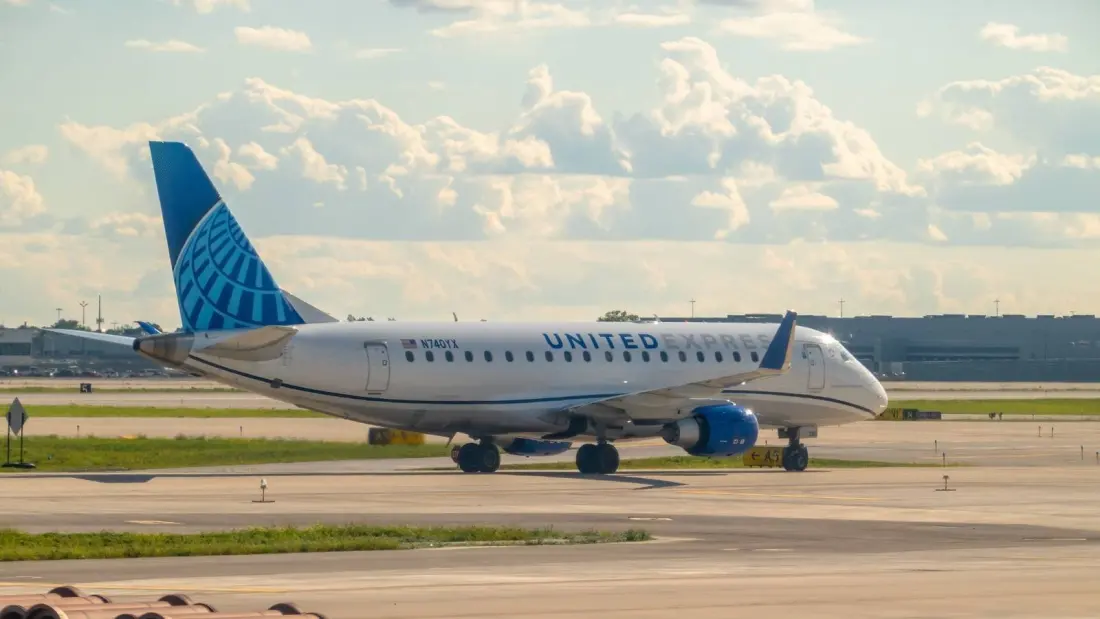
A regional jet carrying 72 people declared an emergency and turned back to Houston George Bush Intercontinental Airport on Sunday after the cockpit windshield broke apart shortly after takeoff, with glass falling into the flight deck.
The Mesa Airlines-operated Embraer E175, flying as United Express flight UA6309, had just lifted off from IAH bound for El Paso when the glass on the first officer's side failed completely. In audio of the radio traffic shared by Chron, the crew told controllers the pane had "busted completely through" and was not just a cracked layer — hence the mayday call and an immediate stop to the climb. Houston Fire Department crews met the aircraft on the tarmac, and it was later cleared to taxi to a terminal area pending inspection. No injuries were reported, and passengers were rebooked onto another aircraft, reaching El Paso that same afternoon.
What makes this incident unusual is what it wasn't. There was no depressurization and no sign of a bird strike, the two most common culprits when cockpit glass fails. That leaves maintenance issues as the leading suspects: improperly fitted windshields — including the wrong size of securing screws — have caused failures before, and cockpit windows are electrically heated to prevent icing and fogging. If moisture seeps into the window laminate, the wiring can short or arc, degrading the glass over time until it gives way.
History shows how serious this can get. In 2018, the cockpit windshield of a Sichuan Airlines A319 shattered at 32,000 feet, partially sucking the co-pilot out of the aircraft; a manufacturing defect was blamed. Frontier Airlines had an A319 lose a windshield in 2015 after the crew saw arcing and spreading cracks en route to New Orleans. The most infamous case remains British Airways flight 5390 in 1990: a maintenance manager had fitted bolts that were too short and too thin, and at 17,300 feet the windshield blew out, pinning the captain outside the aircraft in the slipstream while the crew held him and the first officer landed safely in Southampton. He survived with frostbite, fractures and other injuries.
The FAA will investigate the Houston incident, with the NTSB potentially joining. Given the limited scope, findings could arrive faster than the weeks or months such inquiries often take.
Why should travellers care? Two reasons. First, cockpit windshields are built with multiple layers, and crews train constantly for exactly this scenario — the system worked on Sunday, with a safe return and passengers on their way within hours. Second, if you're ever on a flight that turns back shortly after departure, a rebooking onto a replacement aircraft the same day is the normal outcome, as it was here.