A southbound thru-hiker's first week on the Continental Divide Trail reads like a crash course in what Glacier National Park is really like in early July — wet boots, bear nerves, wildflowers, and trail magic of the toilet-paper-sharing variety.
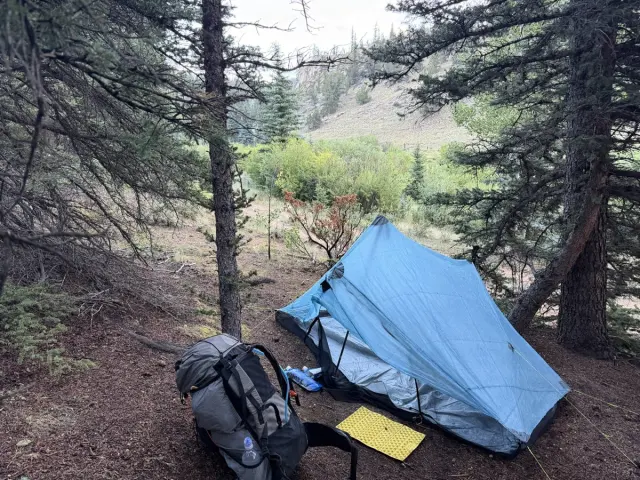
Writing on The Trek, a hiker known as Indy documents days three through seven of a Canada-to-Mexico attempt, beginning at mile 49.6 near Reynold's Creek. The first real test isn't distance — it's conditions. Trails through the Virginia Falls area are essentially streams, and beyond the tourist bubble the route degrades into downed trees and bushwhacking through wet cow parsnip and thimbleberry.
Wildlife is the constant undercurrent. The group's first black bear sighting has everyone hoping it might turn out to be a grizzly, purely for story value. A moose startles another hiker near Triple Divide Pass. The author's biggest pre-trip fear — grizzlies — fades with practice: calling out "hey YO!" every few minutes becomes routine, especially when a trail companion's enthusiastic shouting does the noise-making for everyone.
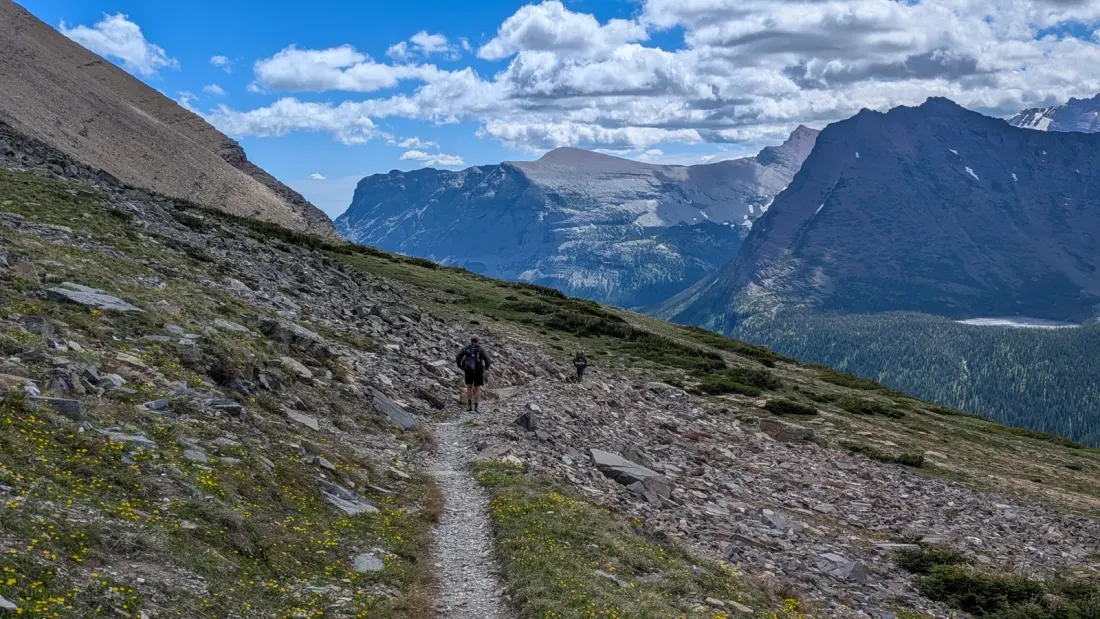
Triple Divide Pass, the group's first big pass of the trail, delivers glacier lilies, one tame snowfield, and a dramatic reveal — the south side drops into a cirque with snowmelt waterfalls and a cliff-side descent. July conditions were mild enough that an ice axe and even microspikes proved largely unnecessary.
The most instructive day is the choice between Pitamaken Pass and the Dawson Pass alternate on July 4. After initially declining the snowy traverse as too risky, the author reconsiders up close, crosses it in microspikes as a no-fall zone with a new hiking partner from Belgium, and is rewarded with views of a glacier-carved valley and trail hugging a sheer cliff beneath Flinsch Peak. The lesson: scout snow obstacles in person before writing off an alternate route.
Town stops matter just as much as summits. Two Medicine's general store sells $2.75 grilled cheeses and huckleberry cider; East Glacier offers hostels (Brownies, Looking Glass), shared laundry, resupply logistics, and the gravitational pull that makes it feel like the Hotel California of the CDT. There's also a lesser-known administrative detail: a short stretch of trail crosses the Blackfeet Reservation, where hikers can buy a recreation permit online.
For anyone eyeing the CDT or a Glacier backpacking trip, this dispatch is a realistic preview: short early-mileage days to protect injury-prone bodies, mud and overgrowth rather than postcard paths, edible puffball mushrooms if you know your fungi, and the reality that cow parsnip can cause skin reactions when cut plants touch skin in sunlight. The trail rewards flexibility — last-minute decisions on gear, alternates and rest days shaped the whole week. Full credit to The Trek for the original trip report.