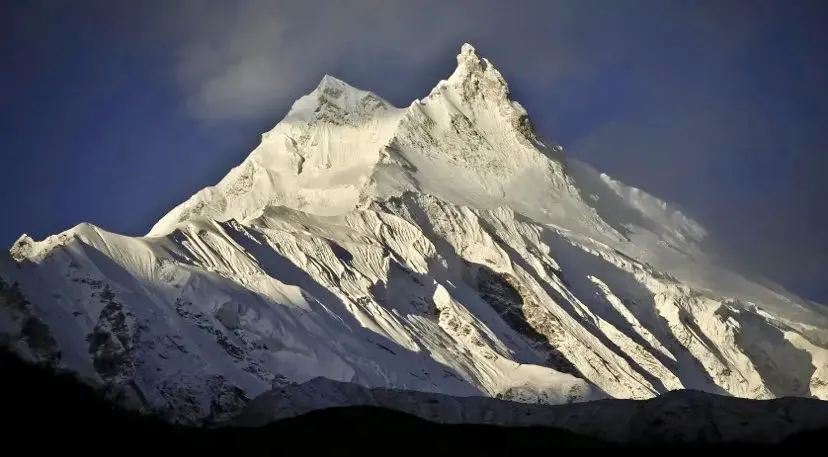
Manaslu, Nepal's 8,163m giant, ended its autumn season early this year after heavy snow, a Camp 3 avalanche that killed two climbers, and a storm that emptied Base Camp despite record permit numbers. It's a reminder that this mountain has a long, grim memory — and two dates stand out, exactly 40 years apart.
In spring 1972, a South Korean expedition returned to the Northeast Face on a mission that was painfully personal. Climbing leader Kim Ho-Sup wanted to reach the summit and recover the body of his brother Kim Ki-Sup, who had died the previous year after falling into a crevasse near 7,600m. The team even brought a sled for the descent. Their brother Kim Yae-Sup was also on the mountain. On the night of April 9-10, after heavy snowfall, an avalanche obliterated Camp 3 at 6,500m. Kim Yae-Sup survived an extraordinary ordeal — swept 800m in three bounces, then hit by a second slide — but 15 people died, including Kim Ho-Sup, a Japanese photographer, nine high-altitude Sherpas and a cook. The Himalayan Database counts it among the deadliest single events on any 8,000m peak up to that time.
Tragedy struck the other side of the mountain too. On the technical South Face, an Austrian team featuring a young Reinhold Messner saw Messner summit solo on April 25 without oxygen. Coming down in a building storm, he couldn't find his tent, and when he did, Franz Jaeger was gone. Jaeger was never found; Andi Schlick died in a snow cave during the search. The expedition quit the mountain.
Jump to September 2012 and Manaslu had become far busier — 67 teams, 129 summits that year — but the danger hadn't moved. Camp 3 on the now-standard North Ridge route sat at 6,700-6,800m, directly beneath hanging ice. At 4:30am on September 23, a serac collapse at around 7,500m triggered a massive slab avalanche through the tents. Eleven climbers from teams including German, French, Spanish, Italian and a French-American ski crew were killed. Among the survivors: extreme skier Glen Plake, swept 300-400m into a crevasse, badly bruised but alive. It remains the mountain's second-worst death toll after 1972.
The common thread is sobering: both disasters hit mid-mountain camps pitched under loaded slopes and ice, at almost identical altitudes on opposite sides of the peak. Avalanches account for nearly half of all deaths on Manaslu. For anyone eyeing this peak — or even trekking the Manaslu Circuit below it — the lesson is that this is one of the Himalaya's most avalanche-prone mountains, and the camp sites themselves are part of the risk.