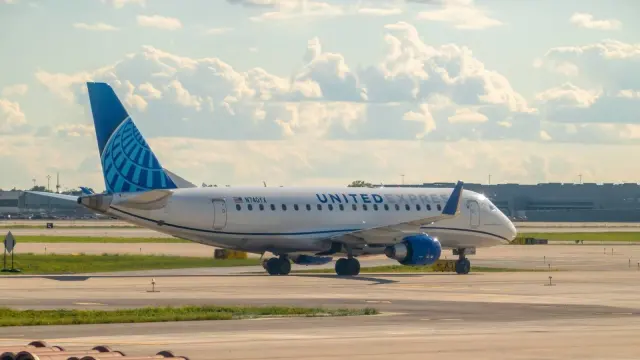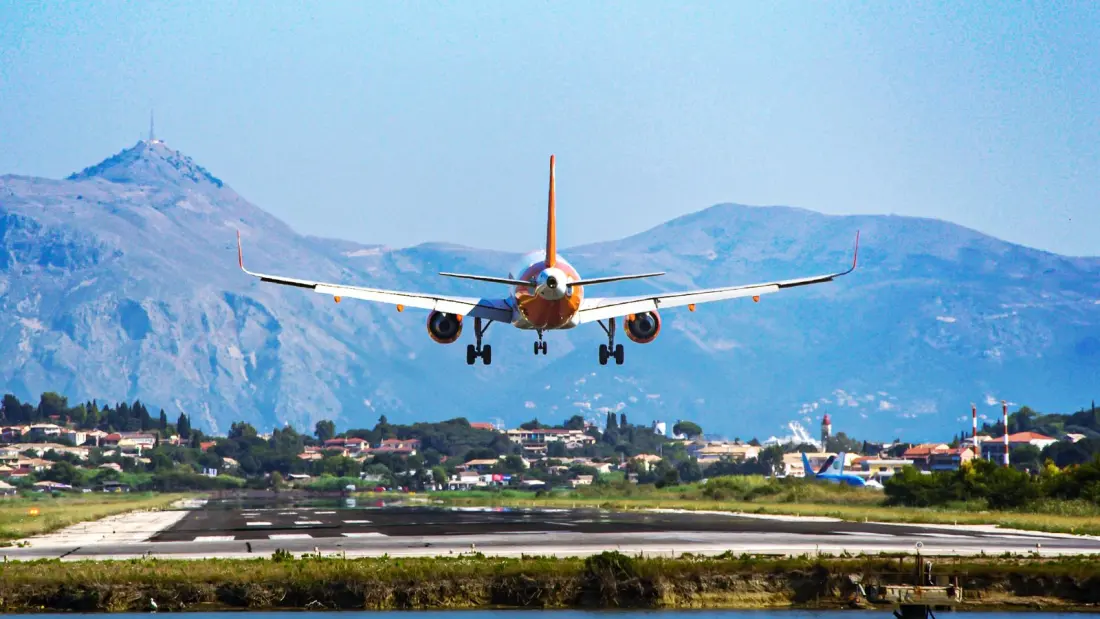
Spotting the same river or coastline pass beneath the wing twice on descent can unsettle even seasoned flyers. But those loops in the sky are almost always a sign the system is working, not failing. Aviation explains what's actually happening when a flight circles the airport on purpose.
The classic version is the holding pattern — a precise oval 'racetrack' flown around a fixed navigational point, often miles from the airfield itself, not directly over the terminal as many passengers assume. Pilots fly it with autopilot guidance, turning right unless told otherwise, holding at a safe altitude until air traffic control slots them into the landing queue. Below 14,000 feet, each inbound leg lasts about a minute; higher up, it stretches to ninety seconds.
Controllers order holds mainly when demand outstrips runway capacity. Big hubs like London Heathrow routinely park arrivals in stacks when a runway closure, an emergency landing or a blocked taxiway snarls the flow. Weather is the other big trigger — thunderstorms, wind shear or sudden fog can shut an approach temporarily, and holding lets crews wait and monitor fuel rather than divert immediately. Most holds last just minutes, though the article cites a Garuda Indonesia A330neo that flew 24 loops over four hours waiting for restricted airspace over the Bay of Bengal to clear.
Not every delay needs the full racetrack. For small timing tweaks, controllers stretch an aircraft's downwind leg by a few miles, issue gentle radar vectors, or ask for a single 360-degree orbit while the plane trundles along at 2,000 to 5,000 feet. It's low-key path management, not drama.
Sometimes the circling is the crew's own call. A warning light on final approach — landing gear, hydraulics — prompts a hold at a safe altitude so pilots can run checklists without rushing. And because airliners can take off heavier than they're certified to land, a jet that has to turn back shortly after departure may circle to burn off fuel, or dump it over water or unpopulated areas, before touching down within weight limits.
Finally, there's the go-around: an aborted landing when a gust shoves the plane off centreline, a preceding jet lingers on the runway, or something strays onto the tarmac. Pilots climb away, loop back and try again. It's drilled as a routine manoeuvre, not a failure — and the ten to fifteen extra minutes are the price of a properly stabilised touchdown.
For travellers, the takeaway is simple: circling almost always means safety margins are being respected, whether that's spacing, weather, weight or a second attempt at a landing. The rare exception worth remembering is fuel-related holding on long diversions, which occasionally causes missed connections — worth building a buffer into tight itineraries. Otherwise, sit back and enjoy the bonus aerial tour.
Via Simple Flying.