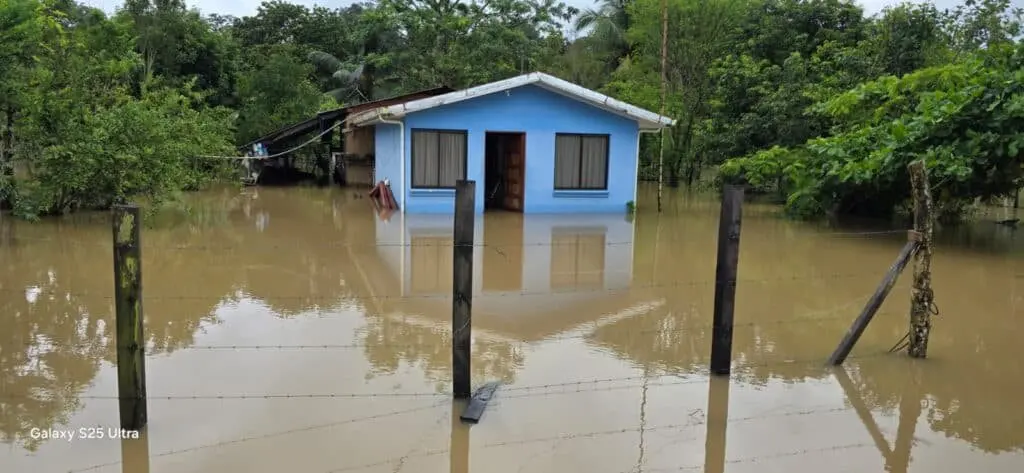
Tropical Wave 47 left a soggy mark on Costa Rica over the weekend, flooding more than 400 homes and pushing a handful of residents into temporary shelters. The storm dumped between 30 and 60 millimetres of rain across much of the country on Saturday, with Laguna de Fraijanes topping the charts at 125 millimetres — nearly five inches in a single event.
The hardest-hit areas included Fraijanes, Sarapiquí, Pococí, Guatuso and Liberia, according to the National Emergency Commission (CNE). Two shelters opened in response: four people from Palenque del Sol stayed in Guatuso, while two residents of Buenos Aires in Liberia were relocated after the Liberia River burst its banks. Crews spent the following day clearing drains and checking roads, bridges and homes for damage, with aid going out in Guatuso and Fraijanes.
The wave itself has moved on into the Pacific, but that's not the end of the story. The CNE reports soil saturation hit 100% across broad swathes of the Central Valley and above 80% elsewhere. In practical terms, even a modest follow-up downpour could trigger fresh flooding, overflowing streams or landslides with no new storm system required. Anyone living near rivers or on steep slopes has been told to stay alert and follow local emergency guidance.
The force of the weekend water was striking in places. In Río Piedras de Tilarán, floodwater turned a road into a current strong enough to sweep an unoccupied car away. San Juan de Dios de Desamparados saw streets flood when drainage systems simply couldn't cope.
So what does this mean if you're travelling to Costa Rica? Roads are not closed en masse — the country is open and functioning. But conditions can shift fast in the rainy season, especially on mountain routes and near rivers. The CNE's advice to locals applies equally to visitors: drive during daylight if you can, skip night journeys in heavy rain, and check current road and weather reports before setting out rather than trusting information from earlier in the day.
Timing matters here. September and October are traditionally the wettest months for the Pacific slope and Central Valley, and successive rounds of rain on already-saturated ground amplify the disruption — as this weekend proved. If your trip falls in this window, build in buffer time for mountain transfers, keep an eye on IMN forecasts and CNE alerts, and consider basing yourself somewhere with flexible day-trip options rather than a long, remote drive on a fixed schedule.
Costa Rica's rainy season greenery is part of its appeal, and most travel continues without incident. But this event is a good reminder that nature sets the pace in the tropics. Check conditions on the morning of travel, heed road closure notices on landslide-prone routes like those through the mountains, and you'll be able to enjoy the country safely while the crews finish mopping up.