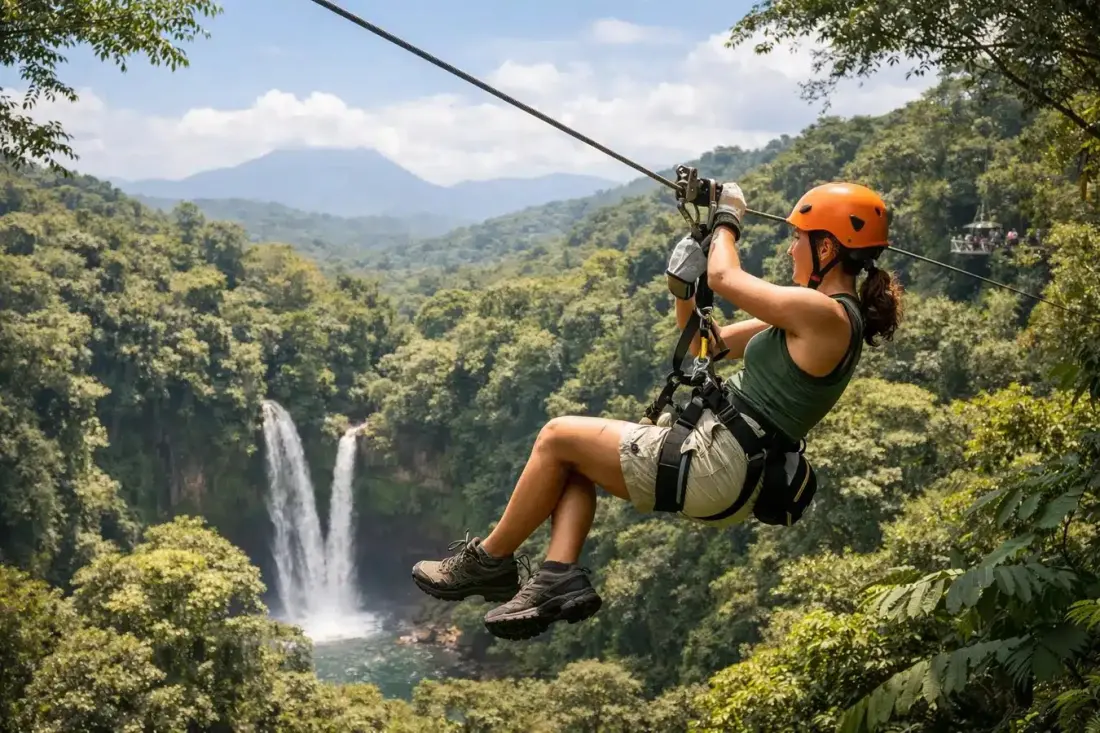
Costa Rica didn't invent the zipline so much as perfect the pitch: canopy tours here come wrapped in volcano slopes, cloud forest and protected rainforest, with more than a quarter of the country under some form of conservation. The payoff is that a canopy day feels less like a theme-park ride and more like a guided tour of a living forest — toucans overhead, howler monkeys providing the soundtrack, sloths spotted in the cecropia trees between lines.
Where you go shapes what you get. Arenal is the family-friendly all-rounder: courses cross forested canyons with volcano views (clouds often swallow the summit by midday, so book a morning slot), and the day pairs neatly with hot springs, rafting and a solid dinner. Monteverde is the moodiest of the bunch — cooler air, drifting mist, wind, and some of the longest valley crossings in the country that can quiet even confident travellers. Pack a light jacket and accept that your photos will look atmospheric rather than sun-drenched.
Guanacaste flips the script with a drier, sunnier setting around Papagayo, Tamarindo and the Rincón de la Vieja hills, making it the easy add-on for a beach trip. Many operators bundle ziplining with horseback riding, tubing or volcanic mud baths — fun, but check the schedule, since packed combo itineraries can mean more waiting in large groups than actually flying. On the Central Pacific near Manuel Antonio, canopy tours bring humid rainforest and strong biodiversity within reach of a coast-based holiday.
Safety and sustainability are worth being picky about. Good operators explain the system clearly, fit harnesses carefully, demonstrate braking before the first line and ask about your fitness, injuries and comfort with heights rather than rushing you. Ask directly whether the course uses a redundant safety system and what triggers a weather cancellation — rain alone rarely stops play, but lightning or high winds should. Weight limits, minimum ages and pregnancy policies vary, so confirm before paying for anything nonrefundable.
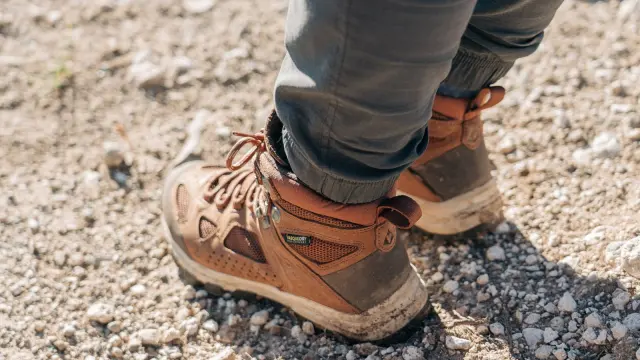
Kit matters less than you'd think, with one exception: closed-toe shoes that won't come off. Quick-dry clothes beat resort wear, especially May to November; tie back long hair, strap on your glasses, and make sure your phone is genuinely secured — shallow pockets and forest floors don't mix. Many operators have rules for action cameras, so ask ahead. And consider taking one line with no camera at all; the wind and sway of the canopy are better stored in memory than on a screen.
Finally, choose operators who earn the word "eco" — small groups, local guides, specific environmental practices, and no wildlife photo guarantees. The animals that make Costa Rica feel wild need distance and intact habitat more than they need an audience. Source: Howler Costa Rica.