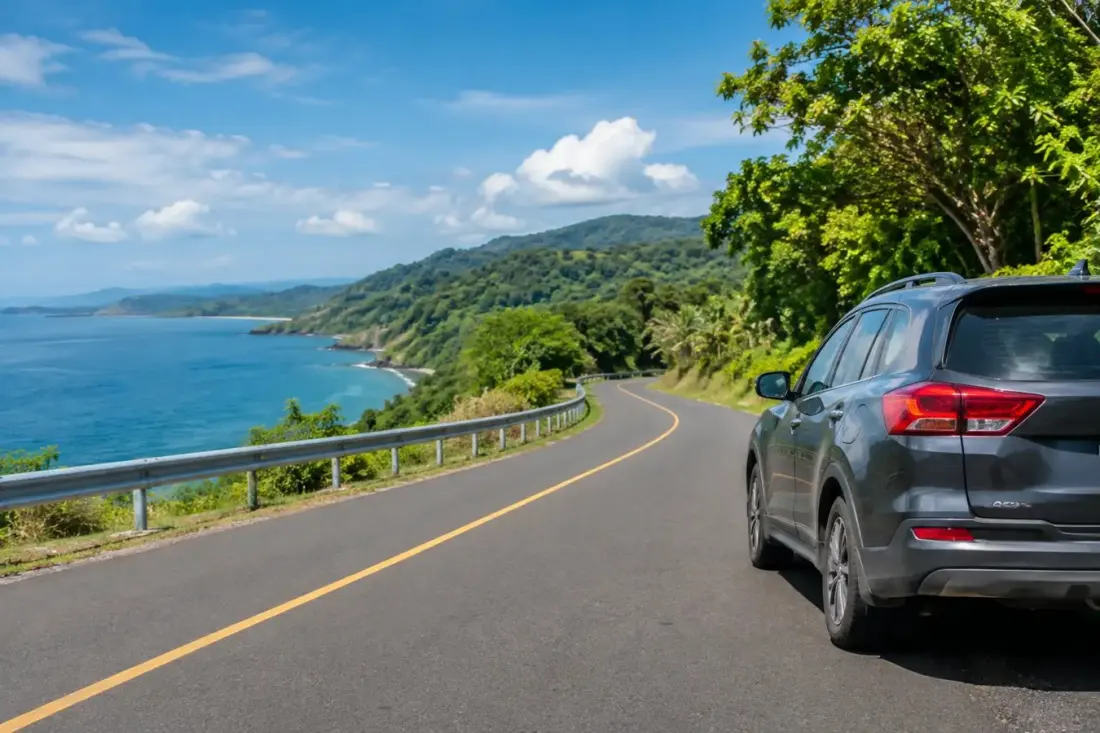
A 60-mile drive in Costa Rica can eat up half a day, and that's not a warning sign, it's just how the country works. The road quality swings fast: smooth, modern highways around San José and Liberia on one hand, then a gravel final stretch with ruts, river crossings or a washed-out shoulder on the way to your beach rental. The trick, according to long-time local drivers, is asking not 'are the roads good?' but 'what is this specific route like right now, in this weather, in this car?'
The last few miles are usually the hardest. Places like Nosara, Monteverde, the Osa Peninsula and parts of the Nicoya Peninsula are perfectly reachable — but the final approach often drops from asphalt to gravel or dirt. That's why the vehicle should match the road. Contrary to popular myth, you don't automatically need a 4x4. A compact car is fine for San José, Liberia, Tamarindo, Playa Flamingo, Sámara and most well-travelled routes. What matters more on rough final stretches is often ground clearance rather than four-wheel drive. Before booking anywhere remote, ask one question: is the road paved all the way, and is a standard sedan sensible this season?
Season changes everything. In the green season (roughly May to November), afternoon downpours fill potholes, loosen gravel and can trigger landslides or temporary closures in steep areas. Dry season brings dust and loose gravel on unpaved roads, plus heavier holiday traffic near the beach towns. Neither is universally better — rainy season trades rougher roads for quieter destinations and lusher scenery.
Timing matters as much as terrain. Locals plan to arrive before dark, not just 'on time'. Street lighting outside developed areas is minimal, and unmarked speed bumps (which are genuinely everywhere), cattle, cyclists and deep potholes are hard to spot at night. A route that looks quick on a map may cross several congested commercial districts around the capital, so pad your estimate generously.
A few habits keep drives enjoyable: download offline maps before leaving signal, carry cash for tolls and parking, slow down for water on the road rather than guessing its depth, keep luggage and electronics out of sight when parked, and refuel before remote stretches where stations thin out. Above all, drive defensively — expect motorbikes filtering through traffic and don't assume other drivers will obey signs the way you would at home.
If conditions turn ugly, change the plan. Heavy rain, a questionable river crossing or an unfamiliar dirt road after sunset are good reasons to stop for the night or reroute. During severe weather, official advisories beat any app's arrival estimate. And for anyone eyeing a property purchase or long-term move, drive to it in daylight, then again after rain — access affects everything from deliveries to resale value.
The honest takeaway: Costa Rica rewards patience and preparation, not bravado. Build slack into your itinerary, ask locals about the last stretch of road, and leave room for a roadside soda lunch or a waterfall detour. That's when the driving becomes part of the holiday instead of a test of nerve.