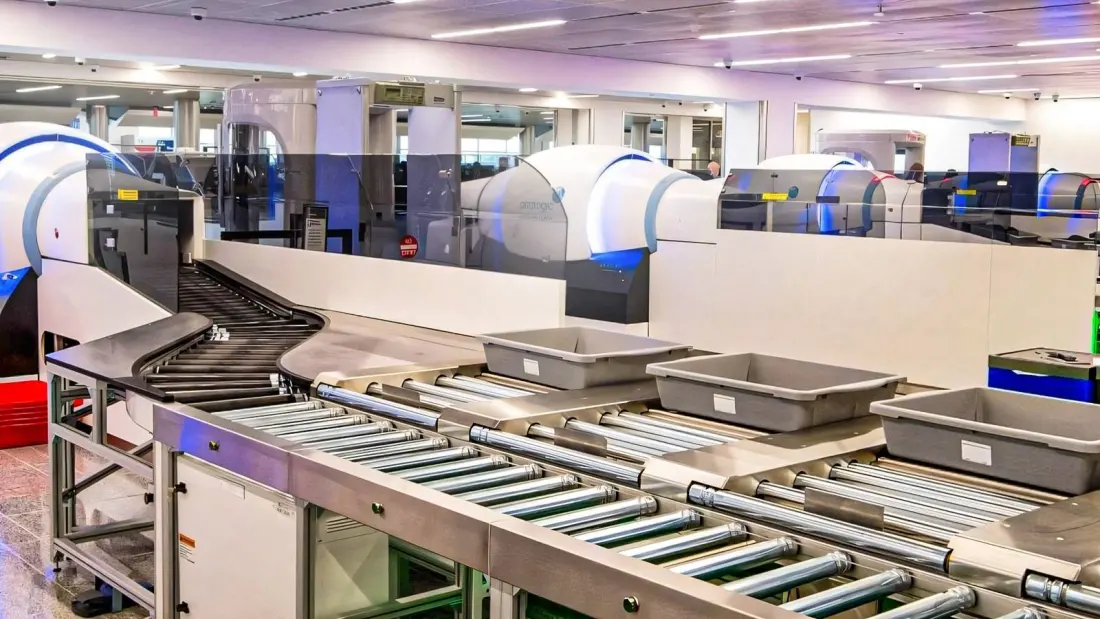
The TSA is spending big on a new generation of checkpoint equipment — contracts worth up to $781.2 million for hundreds of 3D CT scanners — and it's reshaping the routine every American flyer knows. The machines, similar to medical CT imaging, build detailed three-dimensional views of a bag's contents that officers can rotate and zoom, rather than the flat 2D images old X-rays produced. The practical upshot: at equipped checkpoints, you increasingly leave laptops, tablets, cameras and liquids inside your carry-on and just send the whole bag through.
Major hubs are already running them, including New York LaGuardia, Los Angeles International and Hartsfield-Jackson Atlanta. For frequent flyers the change ripples into how you pack — no more stashing toiletries in an easy-access pouch or leaving a laptop sleeve unzipped at the top. It also cuts the bin-juggling bottlenecks that slow busy security lines. The catch: the rollout is uneven, so some lanes still run the old routine and you won't always know until you're there.
There's a hidden downside for rule-stretchers. CT scanners have slightly smaller tunnels than older X-ray machines, and every bag has to physically fit through. The standard US carry-on limit of 22 x 14 x 9 inches hasn't changed, but enforcement has effectively tightened — a soft-sided roller that's an inch too big may be turned away at security rather than at the gate, and you'll be sent back to check it. The scanner is now, in effect, a measuring device.
Film photographers have another reason to pay attention. CT scanning is powerful enough to fog or ruin unprocessed film in a single pass, even inside a camera body. Anyone travelling with analog film should pull it out before screening and ask TSA officers for a hand inspection.
The third shift is at the ID podium. Credential Authentication Technology 2 — facial recognition cameras that match your face to your ID — is now installed at more than 350 US airports, including Miami and Denver. It takes seconds and is becoming the default experience. What many travellers don't realise: for domestic flights it's voluntary. You can simply tell the officer you'd rather not use facial recognition and get a standard document check instead, with no effect on your ability to fly.
For anyone flying domestically in the US this year, the takeaway is practical: check whether your departure checkpoint uses CT scanners before deciding how to pack, make sure your carry-on genuinely meets airline dimensions, and know your opt-out rights at the ID check. Security is getting faster — but it's also less forgiving of the workarounds travellers got used to.