
Over a third of Germany's land area has some form of protection, and the country's national parks and reserves reach from the North Sea coast all the way to the Alps. That makes it surprisingly easy to build a holiday around quiet woodland, clear lakes and long-distance trails rather than city squares and museums.
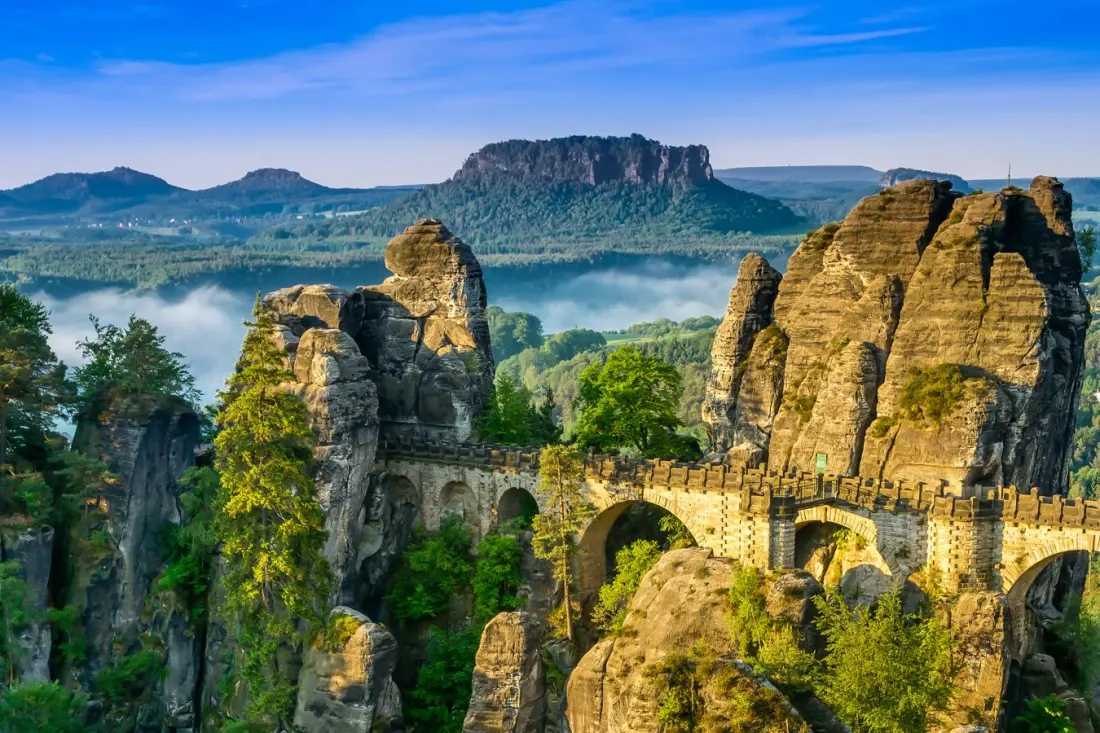
Start with the forests. The Black Forest National Park in Baden-Württemberg covers 10,000 hectares of spruce and fir around meadows and moorland where red deer, peregrine falcons, pygmy owls and the hard-to-spot capercaillie live. Ranger-led walks teach you to read tracks and birdsong. Southeast of Dresden, Saxon Switzerland National Park is the showstopper: sandstone towers, narrow gorges and views over the River Elbe, with the 116km Malerweg trail cutting through it. You don't need to hike the whole thing — short trails reach the famous viewpoints, including the Bastei bridge. Elsewhere, Hainich National Park in Thuringia protects one of Europe's largest blocks of uninterrupted deciduous forest, the Harz mixes woodland with high moors, and 10,000 hectares of Eifel National Park are deliberately left to grow wild.
If you want to slow down properly, try Waldbaden — forest bathing. It's less about distance and more about moving slowly, noticing sounds and smells, and pausing often. Guided sessions pair gentle walking with breathing exercises and stillness, and slot easily into any nature-focused itinerary.
Then there's the water. In Bavaria, the turquoise Eibsee sits below the Zugspitze, Germany's highest peak, with a two-hour circuit past small beaches and swimming spots. Chiemsee, the state's largest lake, is popular for swimming, paddleboarding and sailing, while Lake Starnberg works well as an easy day trip from Munich. West towards the Swiss and Austrian borders, the 53km SeeGang trail along Lake Constance carries premium-trail status from the German Hiking Institute.
The Mecklenburg Lake District in the north is a different kind of water world: hundreds of interconnected lakes best explored by canoe, kayak or — no licence required — a hired electric boat. Rivers count too. The Moselle curves between vineyards and wooded hills, the Saar cuts through gorges on the Saar-Hunsrück-Steig trail, and sections of both are paddlable.
For bigger challenges, the historic Rennsteig runs 169km along the Thuringian Forest ridgeline and can be split into stages. Bavaria's Alps have via ferrata routes for anyone wanting altitude without full mountaineering skills, the Harz has serious mountain biking — the Volksbank Arena Harz alone signposts more than 2,000km of trails — and if you'd rather fly than pedal, zipline parks such as the Hirschgrund in the Black Forest send you across entire valleys.
Why it matters: Germany's outdoors suit almost every travel style, from a restorative forest-bathing weekend to a physically demanding week on a long-distance trail, and much of it is reachable by train from major cities. Nature-focused travellers, slow-tourism fans and active holidaymakers all have reasons to look past the cities.
Story inspired by Wanderlust.