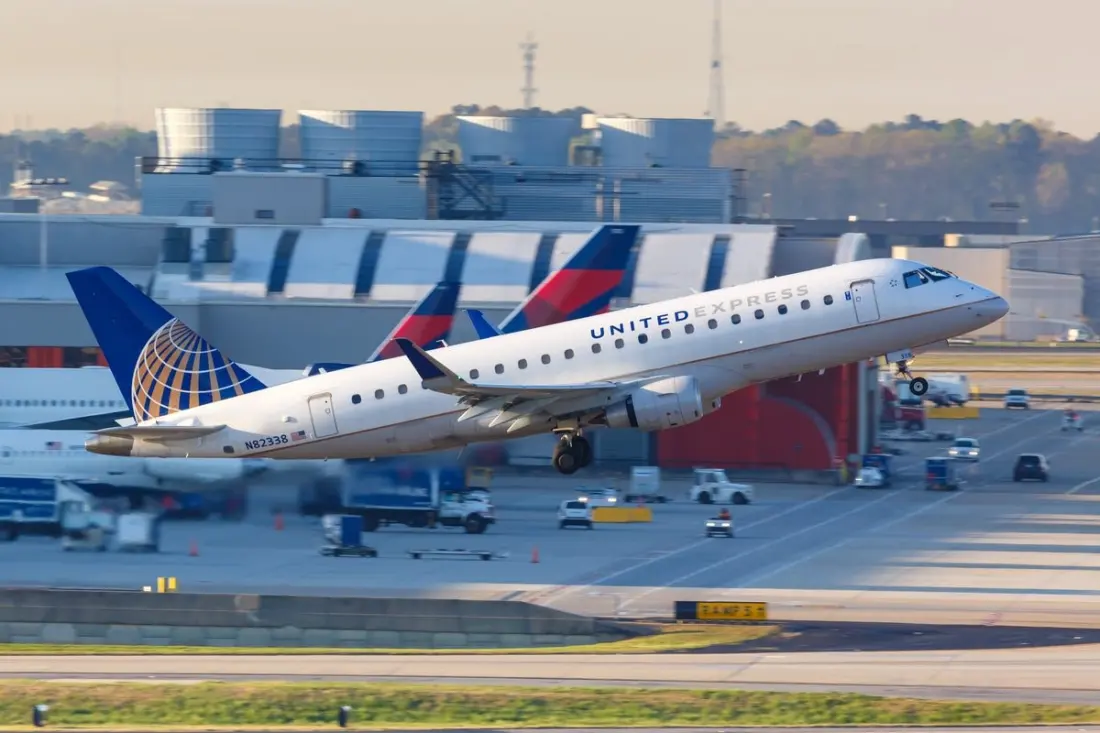
A Mesa Airlines regional jet was back on the ground in Houston within 40 minutes of takeoff on Sunday, after the first officer's cockpit windshield cracked then shattered shortly after departure.
The aircraft was operating United Airlines Flight 6309, a short hop from George Bush Intercontinental Airport to El Paso International Airport that left at around 12.20pm local time. Instead of a straightforward hour-long flight, pilots swung the Embraer E175 around and landed back in Houston at 1pm, taxiing safely to the gate. Nobody was hurt.
Details from air traffic control recordings later published by ABC News make the incident sound more alarming than the usual "cracked windscreen, precautionary return" story. Commercial cockpit windows are built from several layers of tempered glass precisely so that a single crack isn't a crisis. But the pilots in this case reported shards falling into the cockpit, which suggests more than one layer failed. Reassuringly, cabin pressurisation held throughout — the crew confirmed this to controllers — and Mesa says returning to the departure airport was simply standard procedure.
Passengers were rebooked onto a replacement aircraft, which reached El Paso at 3.14pm. The Houston Fire Department attended the original plane and cleared it to fly again once the damaged glass was swapped out. The cause isn't yet known; the Federal Aviation Administration has said it will investigate, and queries have also gone to Mesa and the National Transportation Safety Board.
It's not an isolated kind of event, either. Last October a weather balloon hit a United flight bound for Los Angeles, forcing an emergency landing at Salt Lake City. Bird strikes, hail and windscreen cracks all happen regularly in aviation, and the system is built around redundancy: multiple glass layers, trained crews and a low tolerance for anything that looks off at altitude.
For holidaymakers, the takeaway is a mildly comforting one. A windshield failure sounds dramatic, and this one genuinely was more serious than most, yet the flight still landed safely, kept its cabin pressurised and got everyone to El Paso the same afternoon — about three hours after they'd originally left. Regional jet routes like Houston to El Paso are exactly the sort of sector where these quick turnbacks happen, and the disruption usually amounts to a delayed arrival rather than a ruined trip. If you're ever on a flight that turns around, the odds strongly favour a boring explanation and a replacement aircraft rather than anything worse.