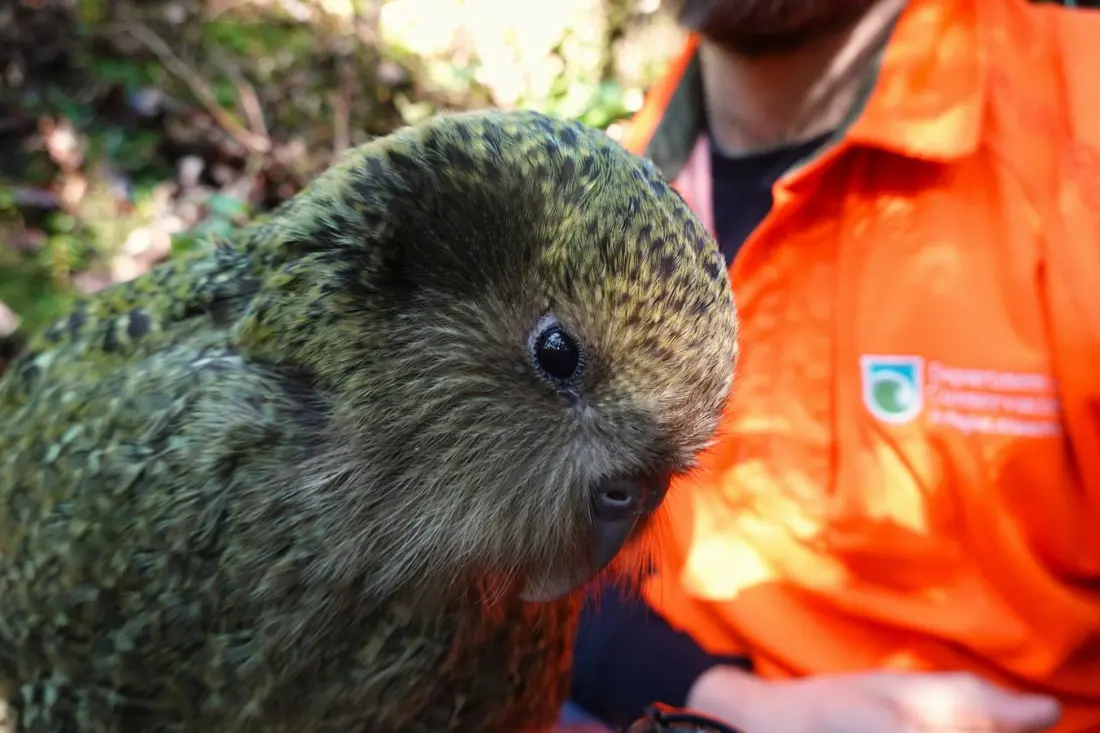
The world's heaviest parrot just had its best year in decades. New Zealand's critically endangered kakapo has reached a population of 325, according to the country's Department of Conservation — a jump from 235 earlier in 2026, and a long way from the grim low of 51 birds in the mid-1990s. Officials say the species may not have topped 300 individuals since around 75 years ago.
The milestone comes thanks to a bumper breeding season: 90 chicks survived to the 150-day mark needed to make the official tally, splitting into 38 females and 52 males. It's the first breeding since 2022, ending a four-year gap. For context, in the early days of the recovery programme it took 16 years to produce that many chicks — this season managed it in one.
Why the long waits? Kakapo are famously reluctant breeders. They don't usually start until at least five years old, and they only nest when rimu trees mass-fruit — a 'mast' event that happens every two to four years. Low genetic diversity, infertility and poor hatching success add to the struggle. The good news: early forecasts suggest the next rimu mast could arrive as soon as 2028, a much shorter wait than the last gap.
The recovery itself is one of conservation's great comebacks. Once widespread before humans arrived, kakapo were given a lifeline when the Department of Conservation and Ngāi Tahu, the principal Māori iwi of the South Island, moved every remaining bird to predator-free offshore islands and ran 13 breeding seasons to rebuild numbers. The programme runs with Te Rūnanga o Ngāi Tahu and backing from Meridian Energy, combining rangers, scientists, iwi and volunteers.
If the bird rings a bell, you're probably thinking of Sirocco, the kakapo who climbed onto zoologist Mark Carwardine's head and attempted to mate with it during a BBC shoot — a clip that went viral and turned the species into an unlikely internet celebrity.
Why it matters for travellers: kakapo can't be visited in the wild — the offshore sanctuaries that keep them alive are strictly managed — but the story is a big reason New Zealand's conservation tourism scene is so strong. Sanctuaries, predator-free islands and wildlife experiences around the country ride on the same model that saved this odd, owl-faced, flightless parrot. And every success like this makes a wildlife-focused trip to Aotearoa that bit more rewarding.
Australian Geographic reported this story first.