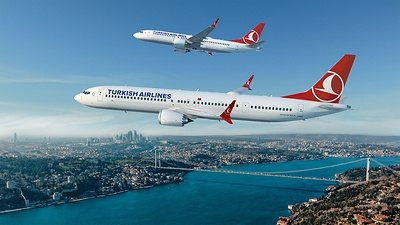
Turkish Airlines has locked in its biggest-ever Boeing single-aisle order: 100 firm 737-8 aircraft, plus options for another 50, with the paperwork signed in the presence of Turkish president Recep Tayyip Erdoğan. The deal wraps up talks that began in 2025 and signals just how aggressively the Istanbul-based carrier intends to grow.
There's flexibility built into the agreement. The airline holds substitution rights allowing it to switch some aircraft to the 737-10, the largest variant in the MAX family — useful for a carrier that wants the option to pack more passengers onto busier routes without committing to them up front. Boeing says the MAX family burns roughly 20% less fuel than the planes it replaces, which matters both for the airline's cost base and its emissions targets.
This isn't an isolated purchase. Turkish Airlines, including its low-cost arm AJet, already flies a fleet of more than 200 Boeing aircraft — 737 MAXs, 787 Dreamliners, 777s, 737 Next-Generation jets and 777 freighters. The new order also follows a separate 2025 commitment for up to 75 787 Dreamliners, part of a wider fleet and network push centred on the carrier's Istanbul hub. Boeing has additionally tied industrial participation into the deal, continuing its investment in Türkiye's aviation manufacturing and supply ecosystem.
Chairman Prof Murat Şeker framed the deal as a step that brings greater efficiency and flexibility to operations supporting the airline's extensive route network, while Boeing Commercial Airplanes chief Stephanie Pope pointed to the long partnership between the two companies.
For travellers, the practical takeaway is continued growth at one of the world's most connected airlines. Turkish Airlines flies to more countries than almost any carrier on the planet, and a larger, newer, more fuel-efficient short-haul fleet usually translates into more frequencies, new regional routes and better connections through Istanbul — handy whether you're flying to Türkiye itself or using it as a stopover between Europe, Asia, Africa and the Middle East. If you're booking with the airline over the next few years, expect to see these 737-8s appearing on domestic Turkish sectors and regional international routes.