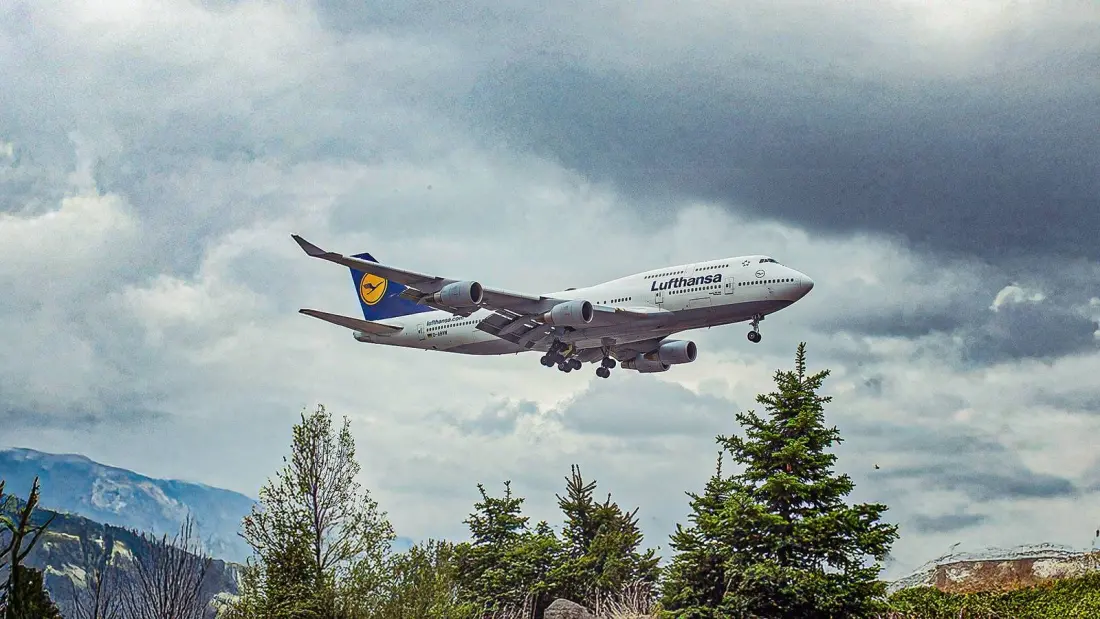
Manchester Airport got a treat last Sunday: two Boeing 747 jumbos parked side by side on the ramp. The occasion wasn't a special event — it was an emergency diversion that stranded 371 passengers, and Lufthansa's answer to the problem.
The trouble started on Saturday, when flight LH470 from Frankfurt to Toronto was cruising at 33,000 feet, roughly 180 nautical miles north of Manchester. A passenger reported a burning smell in the cabin, then another reported seeing smoke. There were also reports of lavatory lights flickering and an entertainment system losing power. The pilots declared an emergency, squawked 7700, and diverted to Manchester. The aircraft involved, a 747-400 registered D-ABVY, is a 25-year-old workhorse — and it's still sitting on the ground in the UK while investigators figure out what caused the fumes.
Suspected smoke or fire is treated as one of the most serious emergencies in aviation, and airlines don't take chances with it. Sending a question-mark aircraft across the Atlantic, where diversion options are few, isn't worth the risk. So Lufthansa did the expensive-but-sensible thing: it dispatched a second 747-400, tail number D-ABVW, to Manchester the next day. That replacement jet picked up the stranded passengers and completed the run to Toronto Pearson, which explains the unusual double-jumbo photo opportunity on the Manchester ramp.
For plane spotters, the cameo was a genuine novelty. Manchester hasn't seen scheduled passenger 747 service since 2020, when Virgin Atlantic retired its jumbo fleet. Two at once, out of nowhere, was a one-off.
There's a bigger story behind why Lufthansa's jumbos are still flying such long routes. The airline operates 25 747s — eight 747-400s and seventeen of the newer 747-8s — but the oldest -400s are now more than 27 years old, and even the 747-8s have a decade behind them. They should have been replaced by Boeing's 777X by now, but that program keeps slipping. Lufthansa now expects its first 777-9, which completed its inaugural flight from Paine Field on May 7, 2026, to arrive in the first quarter of 2027. Until then, the aging jumbos — and a revived fleet of A380s, brought out of pandemic storage when demand surged — are covering the gap. The 747-400s are due to retire entirely by 2027-2028.
Why should travellers care? Mostly because the system worked. A full jumbo's worth of passengers bound for Toronto was delayed by hours, not days, and a replacement aircraft of the same size showed up the following morning. If you're on a long-haul flight and the crew diverts for a smoke or fume event, it's a sign the crew and airline are prioritising your safety over the schedule — as they should. It's also a reminder that the 747 era is winding down: if you want to cross the Atlantic on a jumbo, Lufthansa remains one of the last chances, at least for a couple more years.