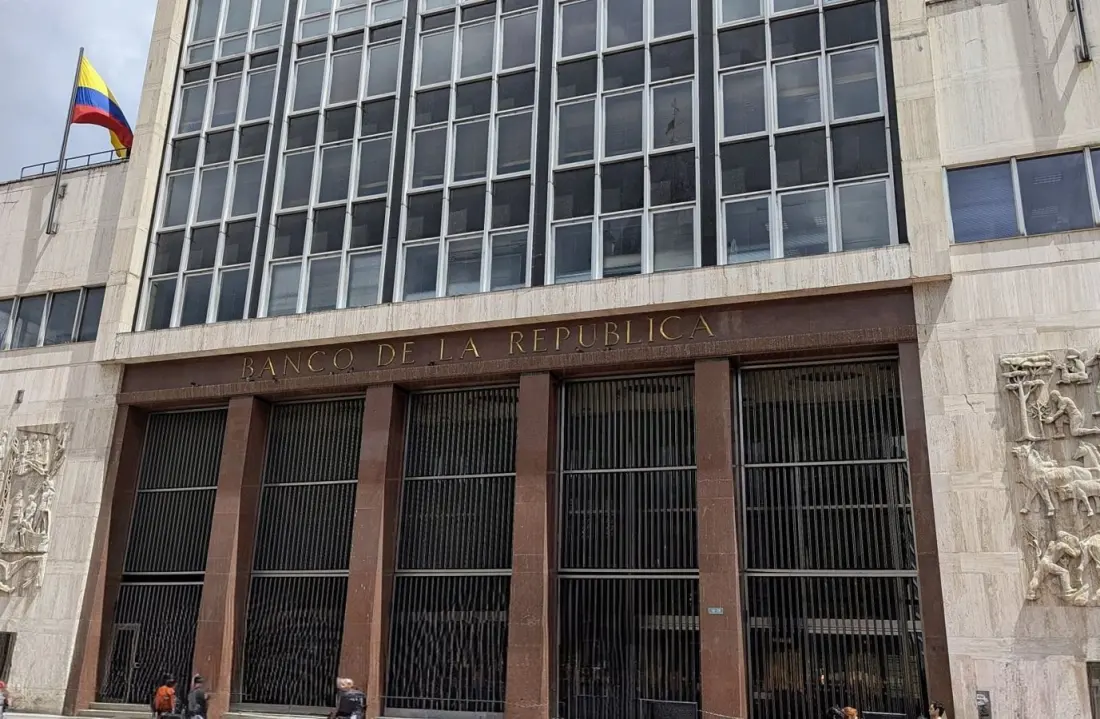
Colombia's central bank has broken months of silence on monetary policy, raising its benchmark interest rate by a quarter point to 12.25% in late September. The move by Banco de la República ends a pause that had held the rate at 12% since July, and it signals that fighting inflation remains the bank's top priority heading into 2027.
The numbers explain the decision. Consumer prices in August were running 6.24% higher than a year earlier — the fastest pace since July 2024 — while core inflation, which strips out food, climbed to 6.30%. Both sit at more than double the bank's 3% target. Governor Leonardo Villar told reporters that the decline in inflation had clearly lost momentum, and a majority of four board members backed the increase. Two voted to hold, and one pushed for an even bigger half-point hike.
Several pressures are converging at once. The El Niño weather pattern is flagged as one of the biggest risks to prices through the end of 2026 and into early 2027, with food and energy costs most exposed. Then there's the earthquake that struck Colombia on August 10, which has handed the government significant reconstruction bills. New Finance Minister Miguel Gómez, attending his first board meeting, also pointed to a tougher global backdrop: higher oil prices and a fresh 25-basis-point rate rise from the US Federal Reserve — its first since July 2023 — are tightening financial conditions for economies like Colombia's.
What happens next matters for anyone watching the peso, local prices or travel costs. Villar said rate cuts aren't on the table until inflation is both controlled and falling. He expects price growth to start easing in 2027, though the 3% target may not be reached until 2028, and two-year inflation expectations currently sit around 4%. For households and businesses, borrowing stays expensive; for visitors, that means a strong-ish cost environment at home even if exchange-rate swings could still work in travellers' favour.
Why should a traveller care? Rate decisions like this ripple through currency values, hotel pricing and everyday costs. A high-rate environment often supports the peso in the short term, which can nudge up the effective price of a Colombia trip for foreign visitors, though it can also tame the inflation that has been pushing up prices on the ground. Anyone planning a trip in 2027 should keep an eye on the peso's movement — and remember that Colombia itself remains a rewarding, good-value destination with plenty to offer beyond the macro headlines: Caribbean beaches around Cartagena and Santa Marta, coffee-country hills near Medellín and Manizales, and the Amazon gateway of Leticia.
For now, the practical takeaway is simple: Colombia's economy is running hot, its central bank is doubling down on restraint, and relief for borrowers — and possibly for prices tourists pay — is still a couple of years out.